

Home / Essex / Pitsea

Pitsea, Basildon's eastern side

Leak detection in Pitsea and Bowers Gifford

In a Pitsea house on a solid floor, a boiler you refill every few days, with nothing wet, often means a heating pipe leaking into the concrete. We find it from the surface.

Heating pipes in screed traced

Sealant questions asked up front

Unmapped supply pipes followed

Get a quote

Lines open 8am to 8pm, every day.

Before the new town, much of Pitsea was split into small plots where Londoners built their own bungalows and weekend huts. After the war the new town replaced much of that with houses on solid ground floors, so leak detection in Pitsea often means looking into concrete.

In many of those houses the heating pipes went into the screed, the concrete layer under the floor covering. A leak there soaks into the concrete instead of pooling, so a falling gauge is often the only clue. Where an older plot survives, its supply pipe may follow a route nobody recorded.

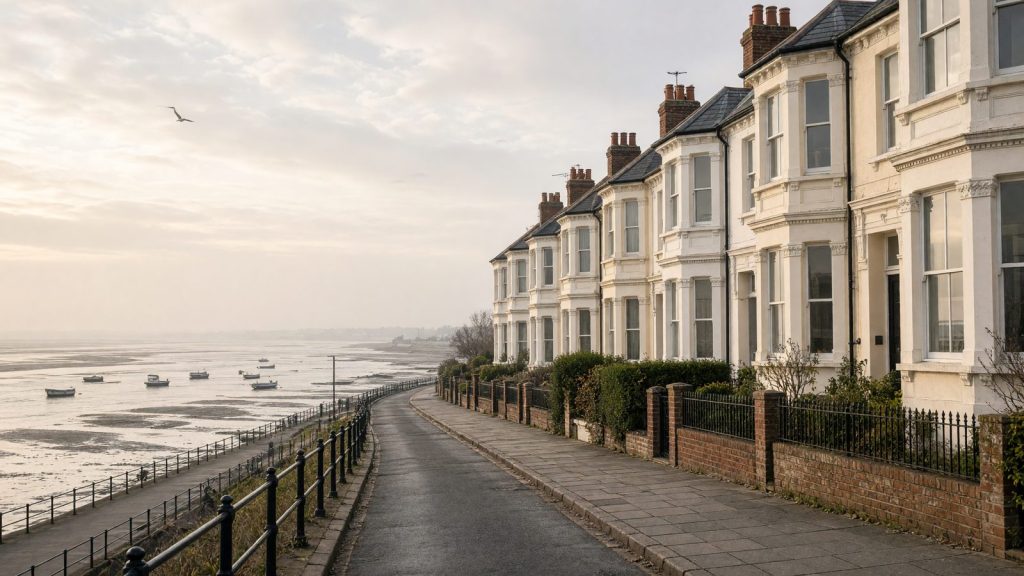
Victorian bay-fronted houses on a hillside road above an estuary, typical of an Essex seaside town A narrow street of Victorian red brick terraced houses with a church tower at the end, typical of an Essex town

Two Pitsea jobs of the usual sort

Boiler losing pressure in a new-town semi

The property

A semi from the new-town years on a solid ground floor. Thin heating pipes run through the screed to radiators along the hall and lounge.

The problem

The pressure needed topping up every other day, though the boiler had passed its service. Nothing was damp; only the gauge kept falling.

How we found it

No sealant had gone in. With the downstairs circuit valved off the gauge held steady, pointing downstairs. Warmed up, the lounge floor showed a hot patch on camera, and a pressure test on that leg agreed.

The outcome

A small square of lounge floor was opened at our photographed mark, and the repair, quoted separately, put an end to the topping up.

Soft ground by the hedge on an old plot

The property

A bungalow on one of the long, narrow plots that pre-date the new town. Its meter sits by the lane, and nobody knew the supply pipe's route.

The problem

A letter warned of water passing the meter all the time. Ground beside the side hedge stayed soft, but digging there turned up only wet clay.

How we found it

Closing the indoor stop tap did not slow the meter, which placed the leak outdoors. Tracer gas fed into the pipe surfaced by the old garage, well away from the hedge, and listening there agreed.

The outcome

We marked the route as far as we traced it and photographed the split. A short section was replaced on the visit, at the figure agreed in advance.

Pitsea households we help

Households refilling the boiler

When the pressure needs refilling every day or two and the boiler has passed its check, note how often and whether any sealer was added. Sealant can upset our tests.

Homes on one of the older plots

A bungalow on a long, narrow plot may take its supply from a lane or past a neighbour. Tell us what you know of the route; we trace the rest.

Owners whose meter never rests

A letter from Essex and Suffolk Water, or a dial creeping with every tap shut, means water is leaving the pipe past the meter, either outdoors or inside.

Doing the meter test yourself

Pitsea's water comes from Essex and Suffolk Water, and many meters here sit under a lid in the footway or by the front boundary. Shut off every tap, jot down the dial, and check again an hour on without using water. A higher number means a leak past the meter, on a supply pipe normally yours.

From the boiler's history to a marked spot

1

How often, and what went in

We start with the gauge: how fast it falls, how often you refill and whether sealant went in. The answers tell our engineer Charlie which circuit to test first.

2

Circuit by circuit

Valves are closed so one part of the heating is isolated at a time. Whichever part loses pressure on the gauge is leaking; the others are ruled out.

3

A warm floor, then proof

With that circuit hot, the thermal camera shows where warmth spreads beyond the pipe line. A second test agrees on the spot before it is marked and photographed.

What finds leaks in Pitsea homes

Pressure testing

A gauge on an isolated section of pipe shows whether it holds. That proves a heating leak exists, and which leg it is on, before we search for the point.

Thermal imaging

Concrete warms evenly over a sound pipe. Over a leak the warmth spreads into a wider patch, which the camera picks out once the radiators have run hot.

Tracer gas

Where nobody knows a pipe's route, we fill it with a hydrogen and nitrogen mix. It rises through soil and paving wherever it gets out, and the detector follows it.

Detection and repair: two separate prices

Trace and access cover, on policies that include it, is generally about tracking down a concealed leak and getting at it. Repairing the pipe may be treated differently, and we quote it separately from the detection. Check your policy first, then send the insurer our report with its readings and photographs.

Common questions in Pitsea

Yes. In a solid floor, water from a heating leak soaks into the concrete, so the boiler gauge is the evidence. We prove which circuit is losing pressure, then trace it with the camera and a second test before marking it.

Please do. Sealant can stop our testing working, because for a while it may plug the very hole we are trying to find. Tell us what was added and roughly how long ago, and we will plan the visit around it.

No. No find, no fee on home water leaks does not cover central heating; full conditions are on our terms page. A heating visit is priced in advance for a half or whole day of detection, and that charge applies whatever the outcome.

Often. Tracer gas fed into the pipe is followed at the surface, then listening confirms the point. An unknown route sits outside the home water leak promise and can take longer, so that visit’s half or full day charge is set first.

No. Only the patch at the mark is opened, by us if we are doing the repair or by your own plumber. The mark shows where to begin; the leak itself is confirmed once the pipe is in plain view.

Either side of Pitsea

Beyond Pitsea, leak detection in Essex takes us to Basildon, Vange and Laindon to the west, and Bowers Gifford, Benfleet and Hadleigh to the east. Wickford and Runwell are to the north, with Stanford-le-Hope across the marshes.

White weatherboarded cottages with picket fences along a village street, typical of Essex

Topping up the boiler in Pitsea?

Ring 07700 102 008, 8am to 8pm, every day, and say how often the pressure needs refilling.