
Home / Services / Trace and access

Insurance claims and written reports

Trace and access leak detection for insurance claims

Before a claim for hidden water damage can go further, the insurer often needs the leak located. We trace it without opening anything up, check it a second way and write up what we found.

Check your policy first

Leak marked and photographed

Readings recorded for the report

Repair quoted on its own

Get a quote

Lines open 8am to 8pm, every day.

A claim for a hidden leak often stalls at the same point. Nobody can say where the water is escaping, and nobody wants a floor opened on a guess. Pinning that point down from the surface is where a water leak trace and access claim starts, and it is our main job.

Read your policy, or phone the claims line, before you book, because some insurers like to agree the work in advance. Then tell us what they have asked for, where the damp or stain shows, and whether a floor or wall has been opened already.

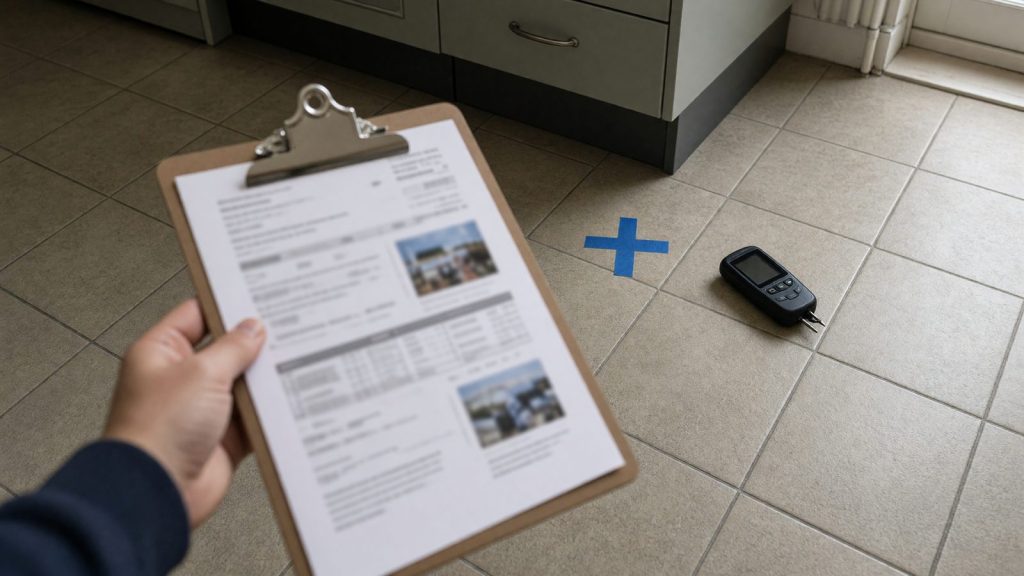
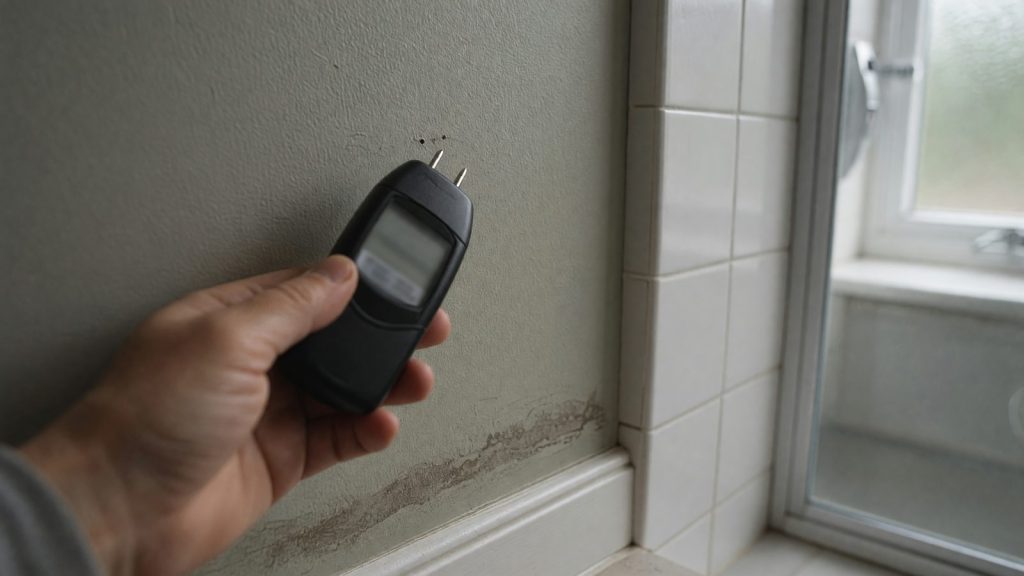
A leak detection report on a clipboard above a tiled floor where the leak position is marked with tape A moisture meter held to a bathroom wall beside a tiled shower, with a damp mark above the skirting

Finding the leak first, then opening up in one place

Trace and access leak detection is the first stage of putting a hidden leak right. The trace is the search, done from the surface with thermal imaging, a ground microphone, tracer gas, moisture meters or pressure testing, whichever suits the pipe. The access is the opening up afterwards to reach and mend it. Some home policies cover both, up to limits that vary, so read yours.

An insurer wants evidence, and the written report gives it: the location, methods, readings and photographs. Before we leave, we put a mark on the floor, wall or ground where opening up should start. Readings point to a leak, but only uncovering the pipe proves it, so every finding is checked by a second, different method before anything is marked.

Typical jobs where an insurer needed the source

Kitchen floor damp holding up a claim

The property

A 1970s chalet bungalow in Royston, with vinyl over a solid kitchen floor and the cold supply rising by the back door, then running under the units.

The problem

The vinyl had lifted and darkened along the units, and the insurer would not consider the claim without a report locating the source.

How we found it

Moisture readings peaked by the back door. A pressure test on the isolated cold supply fell steadily, and tracer gas then surfaced at one joint under the vinyl.

The outcome

We marked and photographed the joint's position, and the owners sent the report with their claim. Opening up started on the mark, with the repair priced separately.

A supply pipe under a conservatory floor

The property

A 1990s detached house in Thorpe St Andrew. Its blue plastic supply runs from the pavement meter beneath a later conservatory, where porcelain tiles sit on concrete.

The problem

A letter said the meter never stopped, even at night. The owners wanted to apply for a leak allowance, which needed evidence of the repair.

How we found it

Even with the kitchen stop tap turned off, the dial kept creeping, which placed the leak outside. Listening was loudest under the conservatory, and tracer gas seeped up between two tiles there.

The outcome

We repaired the pipe during our visit, priced separately, through two lifted tiles and the concrete beneath. The owners sent the report and receipt to the water company.

A new stain beside an old one

The property

A 1930s semi in Chelmsford with a shower room built into a loft conversion, above a bedroom whose ceiling still showed a faint mark from an earlier leak.

The problem

After showers, a fresh brown patch grew beside the faint one. The insurer asked whether this was a new leak or the old damage coming back.

How we found it

The old mark read dry and the new one wet. Running water onto the tray alone changed nothing, but spraying the screen seals made the readings climb, and thermal imaging agreed.

The outcome

The report gave both marks with their readings, so the insurer could see which damage was new. The owners then had the screen seals replaced.

Signs a claim needs the leak traced first

The insurer asks where the water comes from

A claims handler or loss adjuster who asks for the source wants the leak located, and the method explained, before the claim moves on.

Damp spreading with no pipe in sight

A floor or wall patch that keeps growing with no drip anywhere usually means a pipe buried in screed, in plaster or under boards.

A stain below a bathroom or a flat

Water through a ceiling under a shower, or from the flat upstairs, can involve two households and two insurers, and each will want the source.

A water company letter you cannot explain

Readings showing constant flow point to a leak after the meter. Some home policies include finding it, so check yours before anyone digs.

From the policy check to the report

1

Check the cover, then call

Look at the policy or ask the claims line, in case your insurer wants to agree the work beforehand. Then tell us what they need and where the damage shows.

2

Traced, confirmed, marked

Our engineer Charlie picks the method to suit the pipe and works from the surface. A second, different test has to agree before he marks the spot, photographs it and notes the readings.

3

Paid, then written up

Settle up before we go, by bank transfer or card. Once you have paid in full, the written report follows for your claim, and any repair is priced separately.

What each method adds to the report

Moisture meters

We take readings in a grid over the damp ceiling, wall or floor, marking out the spread and the wettest point. Those figures go into the report beside the photographs.

Thermal imaging

A leaking hot pipe leaves a warm smudge on the screen, because the camera sees heat at the surface. It shows the route the water takes, and another test then has to back it up.

Tracer gas

Useful where a leak makes no sound or the pipe is plastic. A hydrogen and nitrogen mix is put into the pipe, finds its way out through the hole, and our detector picks it up above.

People we write claim reports for

Homeowners told to find the source

Your policy covers finding the leak, but the insurer wants proof of where it is. We pin it down without lifting anything and check it two ways.

Owners with a letter about continuous use

The water company has flagged a leak after the meter and may want proof once it is mended. The report, and our repair if you want it, give you something to send.

Neighbours sharing a ceiling

Drips from upstairs raise one question: whose pipe is it? With access to the flat above, we test its fittings one by one, and the report shows where the water starts.

When a claim has stalled

If a claim has stalled because nobody could say where the water was coming from, a report built on readings can fill that gap. Send it with your own photos of the damage and any letter from the water company, and keep copies of everything. What the policy then pays is your insurer's decision.

Where we trace leaks for claims

We take on claim work across East Anglia and the counties around it, in cottages, terraces, new estates and flats where two policies meet. Choose your county below to find your town.

Common questions

Some insurers do. Check the policy wording on trace and access, or ring the claims line, before you book. If they have named their own trace and access plumber, ask whether you may choose someone else. If approval is needed, pass on our price and what the visit involves.

Where the leak is, the methods used, the readings behind the finding and photos of where we marked. It is set out for you to send straight to your insurer, and it does not say whether a claim should be paid. That call is the insurer’s.

It follows full payment for the visit. We take payment when the work is done, and we cannot accept cash or cheques. If a claims handler is chasing you, settling up before we leave means the report is not held up waiting for payment.

Only your insurer can say, because it depends on the policy. You pay us at the end of the visit either way, then claim back what the policy allows. Ask first whether it covers finding the leak, opening up, mending the pipe and making good, as policies often split these.

We find leaks and can usually mend the pipework as well, quoted apart from the search. Any repair price we give beforehand is fixed only for work carried out during the detection visit itself. Agree who makes good tiles, flooring or plaster before anything is opened.

The claim itself stays between you and your insurer. The report comes to you once the visit is paid, written so you can forward it as it stands. If the insurer queries a reading, the figures and photographs in it are there to answer.

Insurer asking for a report?

Call 07700 102 008 once you have checked your policy. Visits are usually booked within 24 to 48 hours, and lines are open 8am to 8pm, every day.