
Home / Services / Thermal imaging leak detection

Thermal camera surveys

Thermal imaging leak detection for heating and hot water

With the heating or hot water on, a leaking pipe under a floor or behind plaster warms the surface. The camera shows that warmth, and we check it a second way before marking.

Strongest on heating and hot water

Calls taken 8am to 8pm daily

Every finding checked a second way

Floors stay down while we search

Get a quote

Lines open 8am to 8pm, every day.

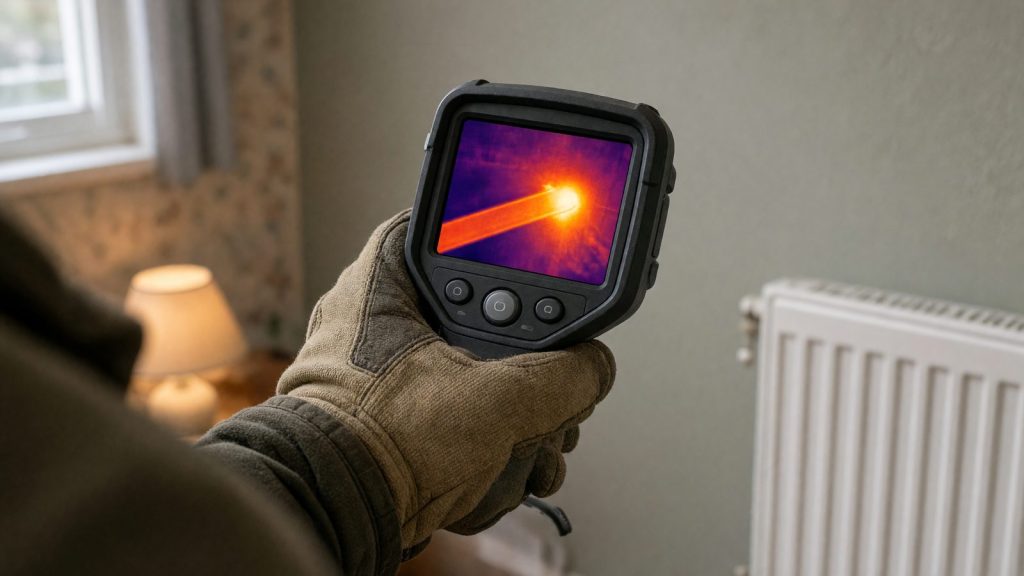
Warm water escaping from a heating or hot water pipe heats the floor or wall around it. A thermal camera, also known as an infrared camera, shows that heat as a bright shape. It scans a room quickly without touching anything, but needs warmth to see.

It has limits. A heating pipe has to be hot. A cold water pipe often shows nothing, and a mains supply deep under a drive is out of reach. The camera tells us where to look, and a second method tells us whether it is right.

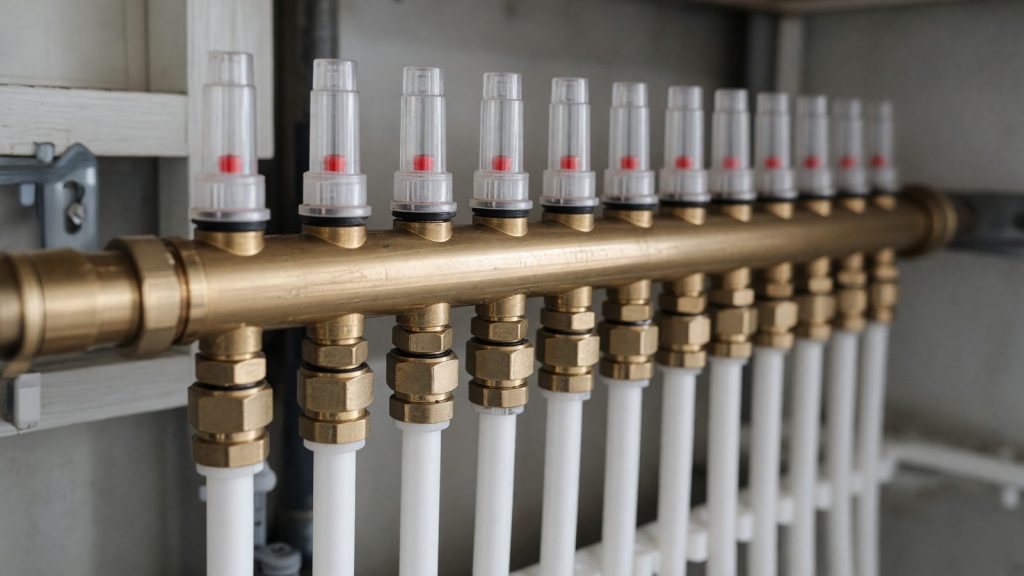
A thermal imaging camera showing the warm line of a heating pipe inside a living room wall beside a radiator Flow meters on the brass rail of an underfloor heating manifold, with pipes running down to the floor

What the camera needs, and what it misses

Thermal imaging leak detection depends on the house doing some of the work. For a heating leak, the boiler needs to have been running so the pipes, and the water leaking from them, are warm. For a hot water leak, a running hot tap does the same. If anyone has added leak sealant to the heating, mention it, as sealant can block the tests.

Some leaks leave the camera nothing to see. Cold mains water sits close to the temperature of the ground, so a supply pipe leaking under a garden, a drive or a thick floor rarely shows. Deep pipes, heavy rugs and insulation blur the picture too. Thermal camera leak detection is one of five methods, and where it cannot help, the others take over.

Typical jobs, including one the camera could not solve

Radiator pipe buried in a Bedfordshire living room wall

The property

A 1960s house in Bedfordshire with solid floors, so the downstairs radiator pipes drop from the floor above inside the plaster of the living room walls.

The problem

The boiler needed topping up about twice a week, and a damp patch low on one wall had been put down to rising damp.

How we found it

A scan with the heating cold showed nothing. After an hour of heating, a warm line ran down the wall and spread at skirting height. Moisture readings peaked there, and with that radiator closed off the pressure held.

The outcome

We marked and photographed the spot above the skirting, then made the repair, quoted separately, through a hand-sized opening in the plaster.

Kitchen ceiling stain under a Cambridgeshire bathroom

The property

A 1930s semi in Cambridgeshire with the bathroom over the kitchen. The towel rail pipes and the basin waste pipe both run through the floor between them.

The problem

A yellow stain kept spreading across the kitchen ceiling. With the towel rail pipes right above it, the owner was sure the heating was leaking.

How we found it

Moisture readings outlined the stain. With the heating hot, the camera showed the towel rail pipes evenly warm, which ruled them out. Warm water poured into the basin then showed heat spreading from its waste, and readings there rose.

The outcome

The ceiling and the bathroom tiles stayed as they were. Moving the basin pedestal aside gave access, and the waste joint was remade on a separate quote during the visit.

Suffolk bungalow leak the camera could not see

The property

A Suffolk village bungalow on a solid floor. The cold supply enters under the kitchen and runs beneath the floor to a utility room at the far end.

The problem

The water company's letter talked of water flowing day and night. The owner expected a thermal camera to show the leak straight away.

How we found it

Turning off the kitchen stop tap stopped the meter, so the leak was inside. Cool water under a cool floor gave the camera nothing. A ground microphone heard it by the utility door, and tracer gas surfaced there.

The outcome

We left a photographed mark on the floor. The owner used their own plumber for the repair and sent our report in reply to the water company's letter.

When a thermal survey is the right start

Warm patch on a tiled floor

A patch of tile or vinyl feels warmer than the rest, with no underfloor heating there. A hot or heating pipe leaking in the concrete below is the likely source.

Pressure falling, nothing wet

The boiler gauge keeps dropping while every radiator and valve is dry. The water is going somewhere hidden, and hot pipes show up well.

Meter turning and a warm floor

The water meter moves with every tap off and one floor feels warm. Together, these often point to a hot water pipe leaking underneath.

A stain that grows after showers

A ceiling mark below a bathroom that spreads after showers suggests a leaking fitting, seal or waste pipe. Warm shower water shows on the camera.

How a thermal survey runs

1

Getting the house ready

When you book, say how often you have to top the boiler up, whether sealant was ever added, and where the pipes run. We may want the heating on before we arrive.

2

Scanning once everything is warm

Our engineer Charlie scans floors, walls and ceilings around the problem and in the next rooms. Pipes appear as warm stripes, and a leak looks like a glow spreading sideways from one.

3

Checking before anything is marked

A bright line may be a sound pipe near the surface. So we test the area a second way, with tracer gas, a moisture meter or pressure testing, before marking and photographing it.

Methods that back up the camera

Thermal camera

It shows surface temperature as a colour picture: good at following warm pipes, poor at cold leaks, deep pipes and anything under insulation or a membrane.

Tracer gas

When the camera points to an area, we can fill the pipe with a hydrogen and nitrogen mix. Where it surfaces confirms the point the camera suggested.

Moisture meter

It reads how wet plaster, timber or a concrete floor is at one spot, telling a damp patch apart from a pipe that is merely warm, and mapping how far a stain has spread.

Who a thermal survey suits

Boilers that keep losing pressure

You top up every few days and no radiator is wet, so the water is probably going into a floor or wall. With the heating warm, the camera can follow it.

Newer homes with underfloor heating

Heating pipes are buried in the concrete floor and run back to a manifold, a row of valves often in a cupboard. Warming one circuit at a time shows which leaks, and roughly where.

A stain under a bathroom

A damp ceiling could be a hot pipe, a cold pipe, a waste pipe or a shower seal. The camera rules some out quickly, so testing focuses on the likely source.

What an insurer needs beyond a picture

Trace and access cover, if your policy has it, comes with its own rules, so read them before booking. A thermal image alone shows an area, not a confirmed leak. The report lays the location, methods, readings and photographs side by side, and follows full payment for the visit. The insurer decides on any claim.

Where thermal surveys come up most

Thermal surveys suit the newer estates around Cambridge, Chelmsford and Bedford, where heating often runs in solid floors, and older homes with refitted bathrooms everywhere we work. Choose your county below.

Common questions

No. The camera measures the warmth of the surface in front of it, so a leak shows only when the water changes that warmth. It gives us an area and a pipe route; a second method then finds the exact point.

For a heating leak, usually yes, and we will say how long when you book. For a hot water leak we may ask you to run a hot tap. For a cold water leak, the heating makes no difference at all.

Sometimes, but often not. Cold mains water sits close to room or ground temperature, so it can leave nothing to see, especially under a drive or a thick floor. Acoustic listening and tracer gas suit most cold supply leaks better.

On its own, often not. Insurers want the leak’s position and proof of how it was found. The location, methods, readings and photographs all go in our report, and whatever the camera suggests is backed by a second method before marking. Ask your insurer before booking.

Not usually. We start in the room where the problem shows and those around it, then follow the pipe routes from the boiler or manifold. A stain can sit well away from the leak behind it, so we go where the warm lines lead.

It depends on the pipe, not the camera. No find, no fee on home water leaks covers one leak on a water main up to 30 m or the hot and cold supply pipes, at least half a litre a minute, where we also carry out the access and repair. It does not cover central heating, shared mains, businesses or leaks that come and go.

Pressure dropping or a warm floor?

Call 07700 102 008 and tell us how often the boiler needs topping up. Visits are usually booked within 24 to 48 hours.