Numbers on the meter keep climbing
Note the reading, use no water for 30 minutes, then check again. Any rise means water is passing the meter with nothing turned on.

Hidden water leaks
A meter that never stops turning, a spreading stain or a water company letter all mean water is escaping. Our water leak detection service finds the leaking pipe, then the point on it, from above the floor or ground.
We check inside or outside first
Two methods agree before marking
Report with readings and photographs
Lines open 8am to 8pm daily
Lines open 8am to 8pm, every day.
Hidden leaks usually show up in one of three ways. The meter counts water nobody is using, damp appears where nothing should be wet, or the boiler keeps losing pressure. Which one you have tells us where to start, so it is our first question when you ring.
Non-invasive leak detection means searching without breaking anything open. Floors, tiles and drives stay put while we test. Two methods must agree on one spot before it is marked, and we photograph it before we go, so whoever opens up starts in the right place.
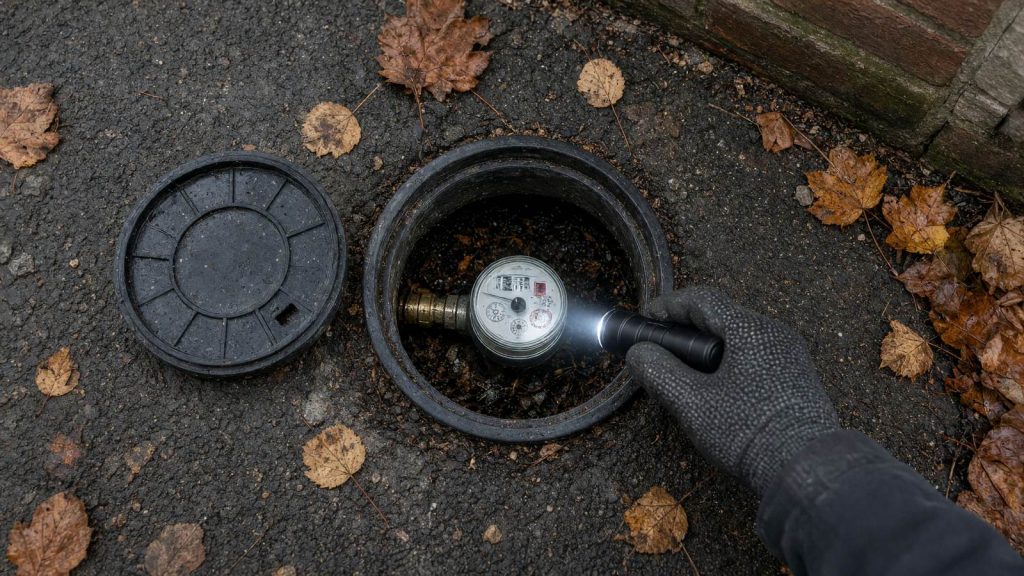
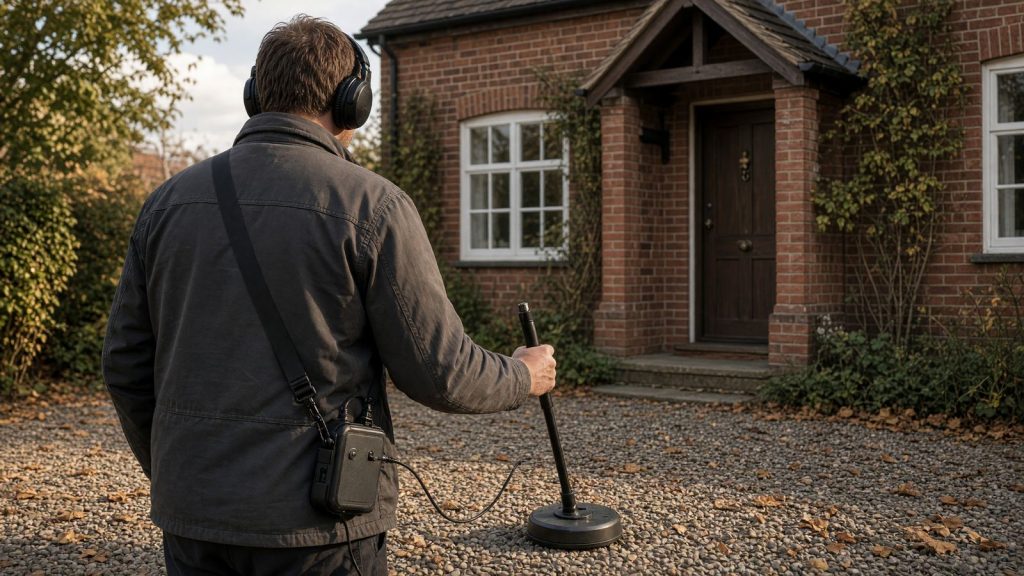
Good water leak detection starts by finding out whether the leak is inside or outside. Turn off every tap, shower and appliance and watch the meter. Any movement means water is going somewhere. Now shut the stop tap indoors. A dial that comes to rest puts the leak inside your home. A dial that carries on means water is leaving the buried pipe from the meter to your wall.
Indoors, the cold supply, the hot water and the heating can each be shut off and tested alone. Damp that spreads after showers points to the bathroom. A wet skirting with no bathroom above can be a cold pipe under the floorboards. A boiler that keeps losing pressure suggests a heating leak, often in a floor or wall. Heating water goes round a sealed loop, so it rarely shows on the meter.
Note the reading, use no water for 30 minutes, then check again. Any rise means water is passing the meter with nothing turned on.
Sent when meter readings show water passing all the time. That usually means a leak on your own pipework, though the letter cannot say where.
Bubbling paint at floor level, or a mark that slowly grows, usually has a pipe nearby. Moisture readings find the wettest point.
Every tap weak at once suggests water is lost before it reaches them. A split supply pipe can starve the whole house.
The letter reports constant flow through the meter but no location. We find out whether the supply pipe or the plumbing indoors is to blame, then trace the point.
Nobody wants tiles lifted on a guess. We test each part of the bathroom in turn, and usually need access upstairs when water comes from the flat above.
Trace and access cover, in some home policies, deals with finding a hidden leak. The insurer will want its position and how it was found, which our written report gives, with photographs.
1
Our engineer Charlie starts with numbers: the water meter, the boiler gauge if heating is involved, and moisture levels on any damp. They show whether water is lost and roughly where.
2
Closing stop taps and valves cuts off one section of pipe at a time. Once we know which length is losing water, we follow it with the method that suits it.
3
No mark goes down until a second method agrees. We photograph it before leaving, and the written report is yours once the visit has been paid.
A water pipe under pressure hisses where it has split. Walking the route with the microphone finds where the hiss is loudest. Quiet leaks, and plastic pipe, may need tracer gas instead.
A moisture meter shows how damp plaster, timber or a concrete floor is. Readings across a stain find its wettest edge, so we know if the source is above, beside or below.
The leaking section is shut off, emptied and filled with a hydrogen and nitrogen mix. It slips out through the hole and a detector finds it at the surface.
The property
A 1930s semi in a Hertfordshire town. An old metal supply pipe runs from a pavement meter under the tiled front path.
The problem
The owners saw the dial still turning at bedtime with nothing running. Bills had crept up, but nothing indoors was damp.
How we found it
With the kitchen stop tap off, water still passed the meter: the leak was in the front garden. Listening was loudest by the step, and tracer gas rose there too.
The outcome
We quoted the repair separately, and the owners had it done before we left. Just the few tiles above the mark were lifted, and the meter then stood still.
The property
A Victorian terrace in Peterborough with boarded floors over a shallow void. The cold supply runs under them to the kitchen at the back.
The problem
Paint along the back room skirting kept bubbling. A builder suggested rising damp, then the owner noticed the meter creeping on overnight.
How we found it
Once the inside stop tap was shut, the meter went still, which put the fault indoors. Moisture readings peaked at one end of the skirting, where listening on the boards was loudest.
The outcome
We marked the board and photographed it. The owner's plumber lifted it and repaired a weeping joint, so the damp proofing never went ahead.
The property
Two rented workshop units in an Essex town. The meter is in one, and a plastic pipe under the concrete yard feeds a washroom in the other.
The problem
The firm's water bill had roughly doubled with no change in how they worked. Neither unit showed any damp, and the yard looked dry.
How we found it
Closing the washroom valve halted the dial, pinning the leak to that pipe. Plastic carries little sound, so tracer gas found the point; listening there caught a faint hiss.
The outcome
The firm sent the photographs of the mark and our report to their landlord, who owns the yard. The repair under the concrete was quoted separately.
Read your policy first, as some insurers want to approve the work. With trace and access cover, expect two questions: where is the leak, and what found it? Our report answers both with the location, methods, readings and photographs, and comes once the visit is paid. Paying the claim is the insurer's decision.
Leaks turn up in city flats, market-town semis, village cottages and farm buildings alike. Pick your county below to see its towns and the kind of pipework they tend to have.
Call 07700 102 008 and tell us what you have noticed. Lines are open 8am to 8pm, every day, and visits are usually booked within 24 to 48 hours.