
Hidden leaks found from the surface
A water meter that keeps moving when nothing is running, or a boiler that needs topping up every few days, points to water escaping somewhere you cannot see.
East Anglian Leak Detection traces that water back to the leak. We work in homes and businesses, from the surface, using tracer gas, acoustic listening and thermal imaging.
Call 07700 102 008 to talk it through. Visits are usually booked within 24 to 48 hours.
What we find
Each kind of leak below needs a different approach, so it helps to describe what you have seen when you call.
Water mains and supply pipes
The pipe that feeds water into the building, often running under a drive, path or lawn. A meter that turns with everything switched off is the usual clue.
Central heating
Radiator pipes, valves and pipe runs buried in floors and walls. If the boiler pressure keeps falling, the system is losing water somewhere along the way.
Underfloor heating
Wet systems run in pipes laid in the screed. We find the circuit that is leaking and the point on it, without lifting the floor to search.
Bathrooms
Shower trays, wastes, seals and the pipework behind tiled walls. Water marks on the ceiling under a bathroom are a common sign.
Buried and underground pipes
Pipes under gardens, yards and solid floors, including supplies to outbuildings and garages, where a leak can run for a long time before anything shows.
Gas pipework
If you can smell gas, ring the gas emergency service before anything else. When they have made it safe, we can trace the leak on the pipework so the repair goes in the right place.
How a visit works
You call and describe the problem
Call 07700 102 008 or send the form. Charlie, our engineer, will ask about the damp, the meter or the boiler pressure, the type of property and how long it has been going on, so he arrives with the right equipment for that kind of leak.
Finding the leak, then checking it
Charlie traces the leak from the surface, using a thermal camera, acoustic listening or tracer gas depending on the pipe, then checks the result with a second method. We do not open anything up to look.
Marked, photographed and written up
The leak is marked on the surface and photographed before we leave. You also get a written report with the location, the methods used, the readings and the photographs.
How we find leaks
Each method suits a different kind of leak. Whichever one finds it, a second method has to agree before we mark the spot.
Thermal imaging
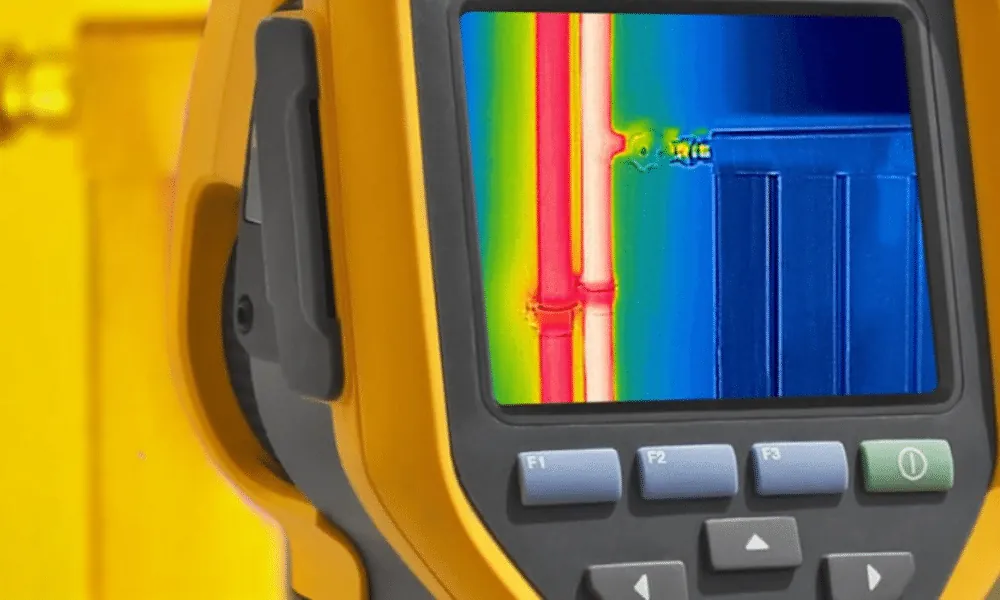
A thermal camera shows the warm or cool trail that escaping water leaves in a wall, floor or ceiling. It suits heating pipes, hot water pipes and underfloor heating, where a leak changes the temperature at the surface.
Acoustic listening
Water forced out of a pipe under pressure makes a noise. A ground microphone picks it up through the ground, even under a concrete path or a tarmac drive, so we can walk the line of a buried supply pipe and find the point where it is loudest.
Tracer gas
For quiet leaks, plastic pipe and gas pipework, we isolate the section of pipe and fill it with a nitrogen and hydrogen mixture. The gas finds its way out at the leak and up through the floor or ground, where a detector picks it up.
Moisture meters and pressure testing
A moisture meter shows how far water has spread through plaster, timber or screed, which helps trace it back to the source. A pressure test tells us whether a pipe or heating circuit is losing water at all, and lets us split a system into sections to narrow the search.
The report for your insurer
Many home insurance policies include trace and access cover, which pays towards the cost of locating a leak you cannot see. Your insurer will want to know where the leak was and how it was found, so when we find a leak you get a written report that sets out:
- the location of the leak
- the method used to find it, and the second method that confirmed it
- the readings we took
- photographs of the marked leak
The report is suitable for a trace and access claim. It also shows whoever carries out the repair where to start.
Before you book, check your policy or call your insurer. Some ask to approve the work first.
No find, no fee
When we look for a water leak at your home, our no find, no fee promise means you do not pay for the detection if we cannot narrow the leak down to a room or a small area. It covers one leak on the water main or the hot and cold supply pipes, where we also carry out the access and repair. Some leaks are not covered, including central heating, shared supply pipes and leaks that come and go. The full conditions are in our terms.
No find, no fee
On qualifying home water leaks
Non-invasive
Leaks traced from the surface
Written report
Leak location, readings and photos
Booked quickly
Visits usually within 24 to 48 hours
About us
East Anglian Leak Detection is a local company that finds hidden leaks for homeowners and businesses across Norfolk, Suffolk, Cambridgeshire, Essex, Hertfordshire and Bedfordshire.
Our engineer, Charlie, carries out the surveys and writes the reports, so the person who traced your leak is the one who explains it to you.
Questions homeowners ask
How can I check for a leak before I call?
Turn off every tap and appliance that uses water, let the toilet cisterns finish filling, then read your water meter. Leave it for half an hour without using any water and read it again. If the numbers have moved, water is going somewhere.
My water company has written to say I may have a leak. What now?
Those letters usually follow meter readings that show water passing all the time, which points to a leak on your side of the meter. We trace the supply pipe from the surface, mostly by listening along its route, and mark the point where the water is getting out.
My boiler keeps losing pressure. Is that a leak?
Often, yes. A sealed heating system should hold its pressure from week to week, so if you are topping it up every few days, water is escaping. A pipe under a floor or inside a wall is a common cause. The boiler's own pressure relief valve can also be to blame, and a heating engineer can check that. We trace heating leaks with a thermal camera once the heating has warmed up, because the escaping water shows as a warm patch.
Can you find a leak under a concrete or tiled floor?
Yes. Heating pipes under screed show up on a thermal camera when the system is hot. Water pipes under concrete can be found by listening for the escaping water, and tracer gas works on plastic pipe and under slabs where a leak makes little noise. The leak is marked on the floor so the repair starts in one place.
What should I do while I wait for the visit?
If water is coming through a ceiling or spreading across a floor, turn it off at the stop tap and keep clear of any light fittings or sockets it has reached. Take photos of the damage as it is now and note the meter reading or boiler pressure. Both help us on the day, and they help your insurer later.