

Histon and Impington

Leak detection in Histon for damp, mould and meter letters

Mould, damp or a water company letter in Histon can have more than one cause. Leak detection in Histon starts by proving whether a pipe is losing water, and which one.

Suspect causes ruled in or out

Written report with photographs

Impington and Girton covered

Phone 8am to 8pm, every day

Get a quote

Lines open 8am to 8pm, every day.

Histon runs straight into Impington, and the two make one large village just north of Cambridge. Homes range from older cottages near the centre to semis, bungalows and later infill, many altered more than once, so pipes from different decades meet under floors and inside walls.

That is why symptoms here can mislead. Mould on a bedroom wall gets blamed on condensation while a hot pipe weeps behind it. A meter letter has owners fearing for the front garden when the fault is indoors. We prove which it is before anything else.

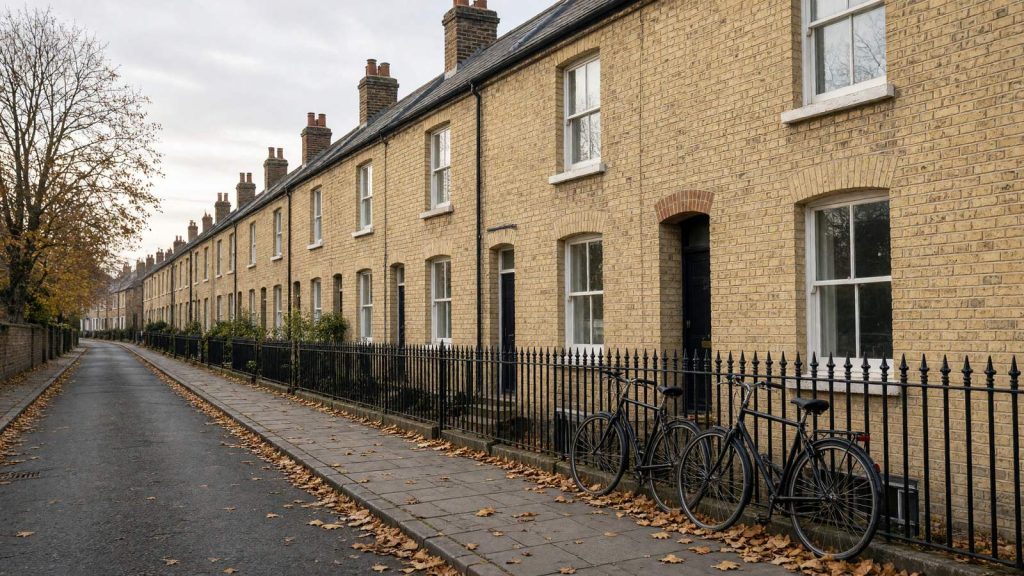
Pale gault brick Victorian terraced houses with bicycles at the railings, typical of Cambridge New-build brick and timber-clad townhouses with solar panels and young street trees, typical of a Cambridgeshire estate

Typical Histon leaks, and what they turned out to be

Bedroom mould that was a hot pipe, not condensation

The property

An interwar semi with a refitted bathroom upstairs and hot pipes running down inside the wall of the back bedroom.

The problem

Black mould kept returning low on the back bedroom wall. It was put down to condensation, yet stayed damp with windows open, and the insurer wanted evidence.

How we found it

Readings were high deep in the plaster, not just on the surface. Once hot water had run for a while, the camera picked out warmth fanning out from one spot, and the meter moved with everything off.

The outcome

The point was marked and photographed. Once the visit was paid, the owners forwarded our report to their insurer, and the repair was quoted separately.

Meter letter that led indoors, not under the garden

The property

A detached bungalow from the village's later infill, with the meter in the pavement and a long front garden over the supply pipe.

The problem

A letter warned of continuous use, and the owners feared the front garden would be dug up. Nothing looked wet inside or out.

How we found it

The meter stood still the moment the stop tap went off, so the loss was indoors. Closing fittings in turn halted it at the en suite toilet, whose fill valve let a thin, silent trickle into the pan.

The outcome

No digging was needed. The owners' plumber replaced the valve, and they sent a fresh meter reading and our report to the water company.

Who rings us from Histon and Impington

Owners with damp they cannot explain

If damp stays wet inside the plaster, or grows whatever the weather, a pipe is more likely than condensation. Readings and thermal imaging tell the two apart.

Policyholders whose insurer wants evidence

Insurers handling a hidden leak often want a written report before a claim moves on. Ours sets down the location, methods, readings and photographs, ready to forward.

Households with a letter but no wet ground

A letter about constant use does not mean the garden must be dug. Shutting the stop tap while watching the meter shows whether the loss is indoors or out.

Your supplier, your meter, your pipe

Check which company is named on your water bill. That company maintains its main and its pipe up to the meter or boundary. The rest, from there to your taps, is normally the owner's, and a leak letter usually points there. With a pavement meter, that private length runs under your front garden or drive.

Ruling things out before tracing

1

Clearing the obvious suspect

If the shower is blamed, we test the pipes too; if the garden is feared, we check indoors first. The meter and stop tap soon show whether the loss is inside or out.

2

One fitting or pipe at a time

Isolating valves are shut in turn while the meter or a gauge is watched. When the reading settles, the last one closed marks the part losing water.

3

Confirming before anything is opened

Readings, thermal imaging or listening narrow down the point. Nothing is marked until a second method backs it up, and the mark is photographed for you and your insurer.

Methods that separate one cause from another

Moisture meters

They read the water held in plaster, timber or a ceiling. Damp that is high deep in a wall, not just at the surface, points away from condensation and towards a pipe.

Thermal imaging

When hot water runs, a weeping pipe heats the plaster or boards nearby. The camera picks up that heat fanning out from one place, even behind sound plaster.

Acoustic listening

When the loss is outside after all, the ground microphone is moved along the buried pipe, over lawn or paving, until escaping water sounds loudest.

Two parts of a leak claim

Many policies split a leak into two parts: finding it and opening up to reach it, often under trace and access cover, and putting right the damage the water caused. Ask your insurer how yours works, and whether any work needs its approval. The location, methods, readings and photographs in our report cover the first part.

Common questions in Histon

Not always. Condensation tends to gather on cold surfaces near windows and in corners, and comes and goes with the weather. Damp that stays wet deep in the plaster, or grows along a pipe run, points to a leak, and moisture readings show which.

Only if the leak turns out to be outside, and then digging starts at the marked spot, not across the lawn. First we check whether the loss is indoors at all: one look at the meter with the stop tap off settles that.

Where the leak is, the methods used to find and confirm it, the readings taken and photographs of the marked spot. It goes to you once the visit is fully paid, ready to forward. Your insurer, not us, decides the claim.

It is harder, because a leak that shows only with certain use may not appear while we test, so note when the damp grows. Leaks that come and go are not covered by no find, no fee on home water leaks, so the agreed price applies.

Yes. Heating circuits are isolated and pressure tested, then followed with thermal imaging while warm. Tell us how often the boiler is refilled and whether sealant has gone in, as it can stop testing working. The price covers a half or full day, agreed first.

Near Histon

Impington, Girton and Oakington are next door, with Cottenham a little further north and Waterbeach to the east. Cambridge is just south, with Cambourne to the west and St Ives to the north-west.

A lone brick house beside a straight drainage channel on flat black fields, typical of the Cambridgeshire fens

Damp or a meter letter in Histon?

Ring 07700 102 008 between 8am and 8pm, any day, and say where the damp is and when it grows.