
Home / Essex / Coggeshall

Old houses, shops and cottages

Leak detection in Coggeshall

Pipes in Coggeshall's old houses have been moved so often that nobody is sure where they run. Our leak detection in Coggeshall works from the surface and confirms the spot a second way before marking it.

Bathroom leaks tested part by part

Supply pipes under old floors

Written report with photographs

Get a quote

Lines open 8am to 8pm, every day.

Coggeshall is a small town with a great many old and listed buildings. Plenty stand right on the pavement, with the meter in the footway and the supply running beneath the front wall. In some older rows, one pipe still feeds two or three homes.

Inside, these houses have been replumbed many times. Bathrooms went into upstairs rooms long after the house was built, with pipes run through brick floors, beams and lime plaster. Water can travel along a beam before it shows, so a stain is not always under the fault.

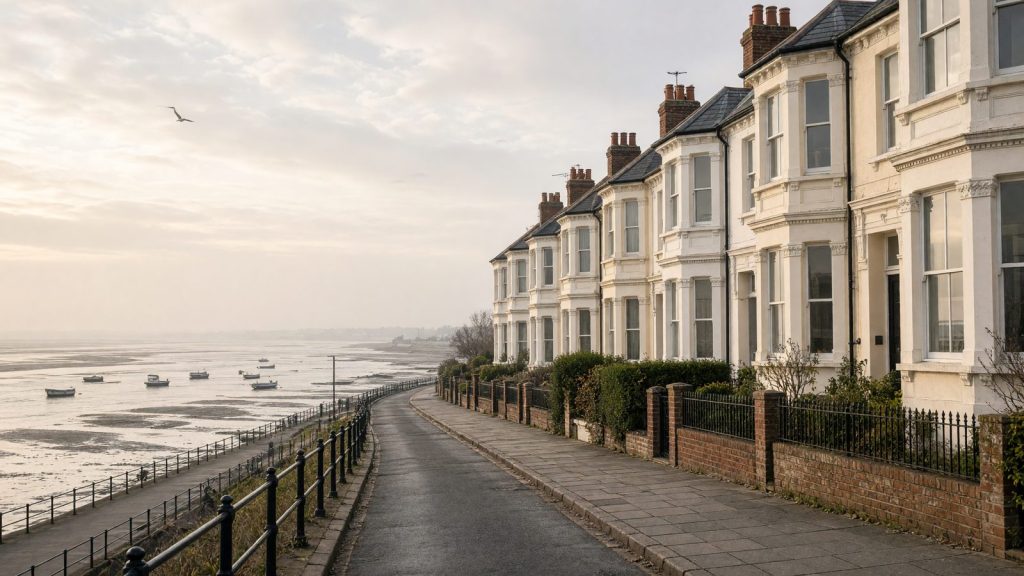
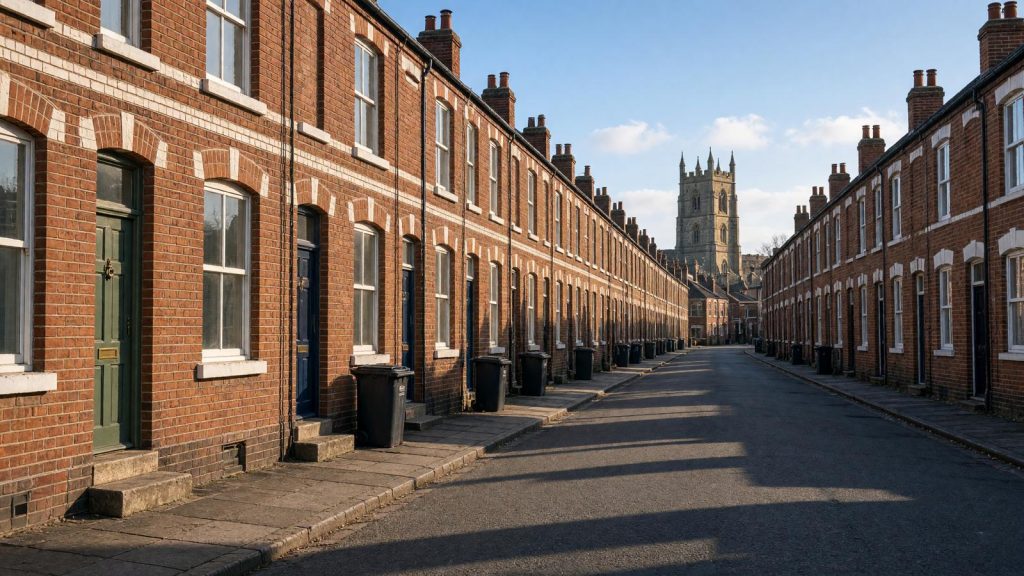
Victorian bay-fronted houses on a hillside road above an estuary, typical of an Essex seaside town A narrow street of Victorian red brick terraced houses with a church tower at the end, typical of an Essex town

The sort of leak we find in Coggeshall

Shower leak that showed up across the room

The property

A timber-framed house in the old centre, with a bathroom added upstairs much later. The shower sits over the bath, above a sitting room with exposed beams.

The problem

A brown stain kept growing at the far end of the sitting room, well away from the bath. Resealing the bath had not stopped it.

How we found it

Moisture readings traced a damp trail along one beam from the bathroom end. When each tap and the shower were run in turn, only the shower wet it, and the thermal camera agreed.

The outcome

The fault was a loose joint on the shower waste, the pipe taking water away. It was marked, photographed and mended through the bath panel, quoted separately.
Shop bill climbing above an old brick floor

The property

A shop on the old main street with a flat above. Its supply runs from the pavement, under a brick floor in the back room, to the stairs.

The problem

The water bill had climbed for no reason the owner could see. Neither the shop nor the flat had a drip, a damp wall or a wet floor.

How we found it

Every tap in shop and flat was off and the stop tap closed, yet the meter crept on. The ground microphone peaked over the back room, and tracer gas rose between two bricks.

The outcome

The spot was marked and photographed. The shop paid in advance, as businesses may be asked to, and only the bricks over the mark were lifted for the repair.

How we narrow it down in an old building

1

Split the building from the street

First the meter, with nothing running. Then we close the stop tap and look again. A dial still creeping round means water is escaping on the supply pipe, before the stop tap.

2

Find the length that loses water

Indoors, we isolate the cold pipes, hot pipes and heating in turn. Outdoors, we work along the pipe from the meter. Either way, the search shrinks to one length.

3

Pin the point, then prove it

A second, different test must point to the same spot before we mark it. Then it is photographed, so opening up begins in the right place.

Who rings us from Coggeshall

Owners of beamed and listed houses

Nobody wants old plaster or a brick floor opened on a guess. We test from the surface and mark one confirmed spot before any tool comes out.

Households holding an Anglian Water letter

Anglian Water's readings suggest a loss, yet the house looks dry. We first find out whether the water is going inside or underground, then follow that pipe.

Shopkeepers with a flat overhead

The leak may be under the shop floor or in the flat above. Say who holds which keys and who pays; a business may need to pay before we confirm.

Methods that suit Coggeshall's buildings

Moisture meters

Pressing a meter to plaster, timber or brick shows how wet it is, point by point. Mapping those readings shows where the damp is heaviest and which way water is running.

Acoustic listening

Water pushed through a crack hisses. A ground microphone hears that hiss through paving, old bricks or a passage, and it grows loudest right over the leak.

Tracer gas

Some leaks make almost no sound. Then the pipe is drained and filled with a hydrogen and nitrogen mix, which seeps out at the fault for a probe to find.

Anglian Water, and the pipe that is yours

Anglian Water supplies most of Coggeshall. If its readings show the meter ticking over even in the small hours, water is usually escaping on the owner's side, since the company's pipe normally ends at the meter or boundary. Along a row fed by one old pipe, finding whose stretch leaks saves arguments.

Old fabric and your insurer

Lime plaster and old brick floors are costly to put back, so speak to your insurer before booking. Some policies have a trace and access section, and a few insurers like to agree the visit first. The written report, with the location, methods, readings and photographs, follows once the bill is settled.

Around Coggeshall

Our leak detection in Essex reaches Kelvedon and Witham to the south, with Tiptree beyond. Braintree is the nearest town to the west, while Gosfield and Halstead sit north, towards the Colne valley.

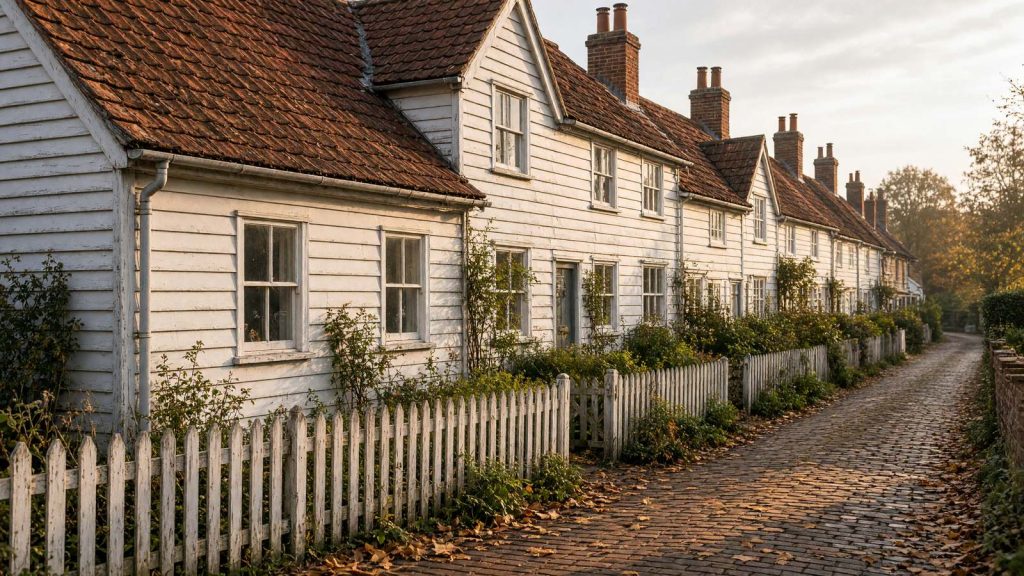
White weatherboarded cottages with picket fences along a village street, typical of Essex

Common questions in Coggeshall

The tests are the same; the route takes more care. Old houses are often replumbed several times, so pipes wander. We ask what you know about past work, then map the damp and test each pipe before saying where opening up should start.

That depends on your deeds and any agreement between you, which we cannot settle. We can show which length is leaking. No find, no fee on home water leaks does not cover shared mains, so the price is agreed with whoever books.

A leak that only shows with the shower running points at the shower, because a supply pipe leaks all the time. Usual causes are the waste, the seal round the tray or water creeping behind tiles. We test each part separately to see which.

In an old house, water often runs along a beam or joist before it soaks through, so the mark can be several metres from the fault. Moisture readings show which way the water travelled, and that leads us back to the source.

Visits are usually booked within 24 to 48 hours, and lines are open 8am to 8pm, every day. Tell us whether the house is listed and roughly where its meter sits, as both of those help us plan the day.

Leak in an old Coggeshall house?

Call 07700 102 008, 8am to 8pm every day, and tell us how old the building is.