

Home / Suffolk / Bury St Edmunds

Bury St Edmunds flats, offices and homes

Leak detection in Bury St Edmunds for flats and offices

Damp in a shared hallway, a jump in your business's water bill, or underfloor heating that keeps losing pressure. Our water leak detection in Bury St Edmunds finds and records the source.

Shared supplies in flats traced

Clear terms for business bookings

Report sent once paid in full

Lines open 8am to 8pm daily

Get a quote

Lines open 8am to 8pm, every day.

Bury St Edmunds keeps its medieval grid of streets, lined with Georgian and Victorian buildings. Some larger houses are now flats, and others hold offices or shops. Beyond the old centre lie business parks and newer estates, where homes often have plastic pipes and underfloor heating.

Converted buildings bring their own puzzle: one supply may feed several flats, and an owner, a tenant and a managing agent may all need the answer. On the newer edges the questions change to which loop or circuit is losing water, and how to keep a finished floor down.

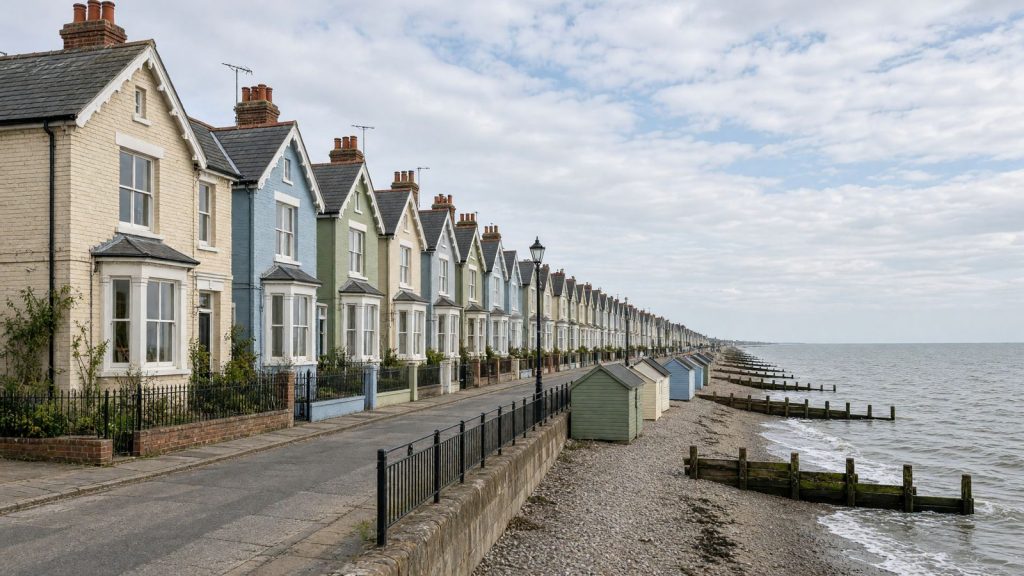
A pink colour-washed thatched cottage with a picket fence and cottage garden, typical of a Suffolk village Painted Victorian houses on a seafront road above a shingle beach, typical of the Suffolk coast

Typical work in Bury St Edmunds

Shared supply leaking under a hallway of flats

The property

A Victorian town-centre house converted into four flats. One supply enters under the ground-floor hallway, then rises to each flat's own stop tap.

The problem

An owner found the hallway carpet damp near the stairs, and the building's water bill had jumped. No flat had a visible leak.

How we found it

Even with every flat's stop tap closed, the dial kept going, so the shared pipe was losing water. We emptied it and introduced tracer gas, which surfaced through the hallway floor by the stairs, where moisture readings peaked.

The outcome

We marked the spot by the stairs and photographed it. The managing agent received the report once paid, and the repair was priced separately.
Café kitchen gas pipe, traced once made safe

The property

A café in an older town-centre building, with its gas pipe running under the tiled kitchen floor from the meter at the front to the range.

The problem

The gas emergency service had answered a call about a gas smell and made the supply safe. The café's gas engineer then needed the leaking length found.

How we found it

A pressure test on the isolated pipe proved it was leaking. With tracer gas inside, our detector picked it up at a tile joint near the range and nowhere else along the route.

The outcome

We marked the tiles and photographed the spot for the café's gas engineer, who made the repair. The report followed once the visit was paid.

Access, testing and the report

1

Every floor we may need

Tell us who can open each flat or office, where the meters and stop taps are, and whether a neighbour's pipes are involved. Access decides how the day runs.

2

Readings below, tests above

Moisture readings show where water arrives; closing stop taps, valves and circuits shows which pipe is losing it. Then we trace the point and confirm it a second way.

3

Paperwork for the right people

Once we finish, you pay by card or transfer, and the written report follows. Pass it to the owner, the agent or the business's insurer as needed.

Who we work for in Bury

Flat owners and managing agents

Water in a shared hallway or through a ceiling. Tell us how many flats share the supply and who holds keys, and we test each flat in turn.

Offices, shops and cafés in the town

A jumped bill or a damp patch with no clear source. We also trace gas pipework, once the gas emergency service has made it safe.

Newer homes with underfloor heating

The gauge falls but the floor looks fine. We close loops at the manifold one by one, then trace the losing loop with the heating warm.

Methods for Bury's older and newer buildings

Acoustic listening

Under a path, lawn or drive, a leaking pressurised pipe makes a steady sound. Our ground microphone hears it through soil, brick and concrete, from the surface.

Pressure testing

Seal off a heating circuit, an underfloor loop or one flat's supply, and its gauge either holds or sinks. A sinking gauge marks the part worth tracing.

Tracer gas

Once testing has found the leaking length, a hydrogen and nitrogen mix is fed in. Where it escapes, our detector finds it through floor or paving.

Flats, shared supplies and Anglian Water

Anglian Water supplies Bury St Edmunds. In a converted building, flats may each have a meter or share one, so check which meter your bill covers before you ring. Pipe past the boundary or meter is private and may be shared. If Anglian Water writes about constant use, ask who else is on that meter.

Newer homes: warranty and policy

Where the house is fairly new, a new-home warranty may apply alongside your insurance, so check both before any floor or wall is opened. For a trace and access claim in Bury St Edmunds, our report gives the location, methods, readings and photographs. It follows payment, and the insurer decides any claim.

Villages and towns around Bury

Horringer and Westley lie west of the town and Great Barton and Thurston to the east, with Ixworth further north-east. Further out, we also reach Woolpit, Lavenham, Thetford and Mildenhall.

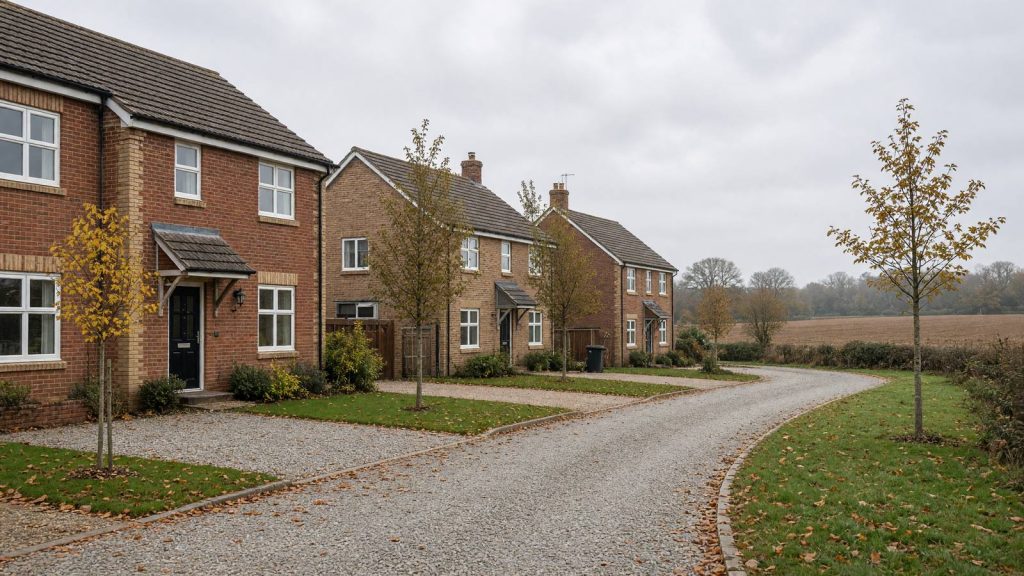
Brick family homes with gravel drives in a cul-de-sac on the edge of a market town, typical of Suffolk

Common questions in Bury St Edmunds

For finding the leak, yes. We shut the loops in turn where they meet the manifold and see which one loses pressure, then warm it, trace it with thermal imaging and confirm with tracer gas. Pipe in insulation, ducting or under a membrane is harder for any survey.

Yes. If the meter still moves with your stop tap closed, the loss is underground between the two. A ground microphone carried along the pipe’s route finds the loudest point and tracer gas checks it, so only our mark is opened.

We close each flat’s stop tap in turn and watch the shared meter. If it stops when one flat is shut off, the leak is in that flat; if it never stops, the loss is on the shared pipe. The report records which.

Book with the business’s name and tell us who is paying. We may want payment from a business ahead of the visit, and cancelling needs one working day’s notice. No find, no fee on home water leaks does not cover businesses, so the agreed price stands, leak found or not.

Ideally a space within 100 m that costs nothing. If only paid parking is nearby, that charge is added at cost, as are tolls and materials. Tell us when you book what parking is close to the building, so we arrive prepared.

Water coming through in Bury St Edmunds?

Call 07700 102 008 and tell us which flat, office or room is affected. Lines are open 8am to 8pm, every day.