
Home / Hertfordshire / Abbots Langley

Village homes, old and new

Leak detection in Abbots Langley

The floor decides how we look for a leak. In Abbots Langley that might be old boards in a village house, concrete on a later estate, or block paving over the supply.

Floorboards scanned before lifting

Central heating leaks traced

Supply pipes under paved drives

Get a quote

Lines open 8am to 8pm, every day.

Abbots Langley is a large village between Watford and Hemel Hempstead, with the Gade valley and canal on its western edge. Older houses cluster around the church, with twentieth-century estates beyond. Leak detection in Abbots Langley starts with one question: what is your floor made of?

Timber floors carry heat and sound differently from concrete, and a block-paved drive differs again. Knowing which you have lets us choose the right test first, which matters on a visit booked as a block of time, and nothing is lifted until the leak is confirmed.

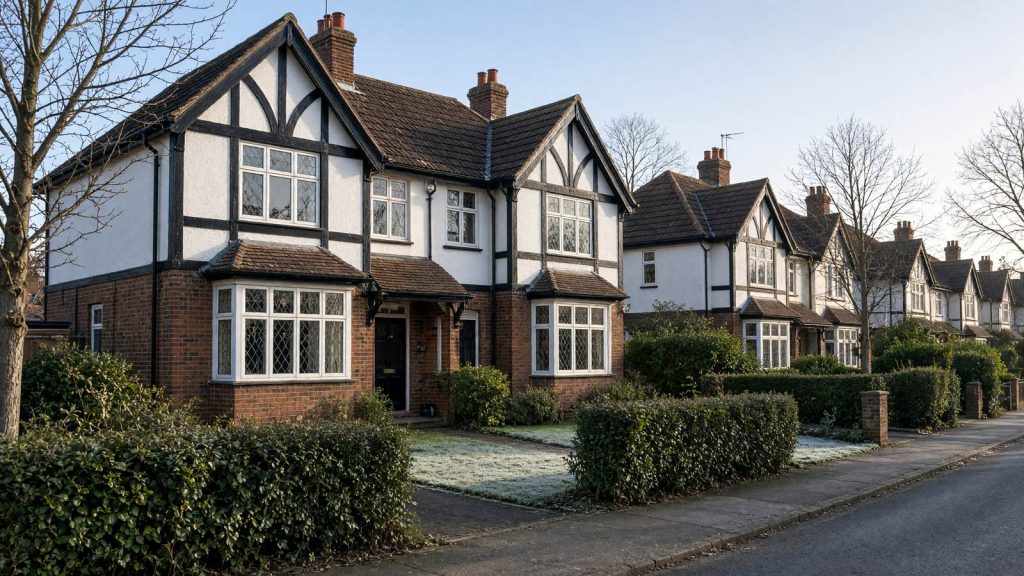
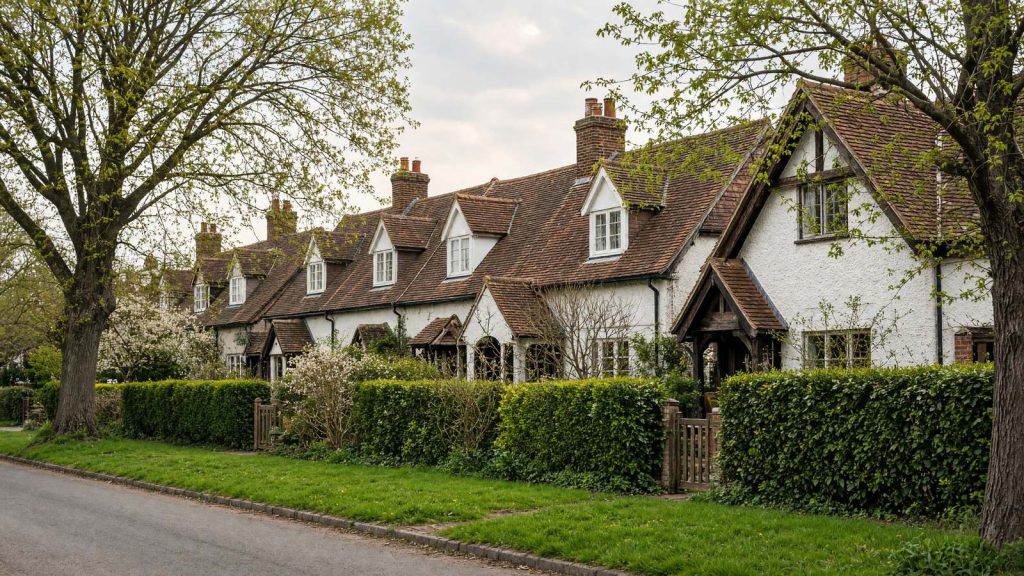
1930s mock Tudor semi-detached houses with hedged front gardens on a frosty morning, typical of a Hertfordshire commuter town White rendered Arts and Crafts cottages behind hedges and wide grass verges, typical of a Hertfordshire garden city

Two typical Abbots Langley leaks

A screw through a heating pipe under the boards

The property

An older village house with suspended timber floors downstairs. Its heating pipes run through the void under the boards to radiators fitted long after the house was built.

The problem

Soon after the dining room boards were screwed down to stop a creak, the boiler began losing pressure daily. Nothing looked wet, and the boiler had passed its service.

How we found it

The downstairs circuit, closed off on its own, kept losing water. Once the heating was warm, thermal imaging picked out heat spreading round one board, and tracer gas rose beside a screw head there.

The outcome

One board came up at the mark, showing the screw through the pipe. We repaired it on that visit, at the price agreed beforehand, and the boiler then held its pressure.
Quiet leak under a block-paved drive

The property

A detached 1980s house on one of the village's later estates, with a block-paved drive over the blue plastic supply pipe from the meter at the pavement.

The problem

Affinity Water wrote that the meter showed continuous use. The owners could hear nothing, saw no wet patch, and had already replaced a dripping outside tap.

How we found it

Closing the indoor stop tap did not stop the dial. Plastic carries little sound, so the ground microphone gave only a faint peak; tracer gas then rose between the blocks there and confirmed it.

The outcome

Four blocks were lifted over the mark and the pipe repaired while we were there, quoted separately. The owners kept the report in case Affinity Water asked about the repair.

Who rings us from Abbots Langley

Homes where the heating keeps losing pressure

Central heating in Abbots Langley's older houses often runs under the boards, where a slow leak drips unseen into the void. Thermal imaging finds it from above, so boards stay down.

Owners with a block-paved drive

When Affinity Water writes about constant use, the supply under the drive is the usual suspect. We listen along it, then confirm with tracer gas before any blocks come up.

Owners with damp on a wall or ceiling

Moisture readings show how far damp reaches and where it peaks, telling us whether water comes from above, a pipe in the wall, or the floor.

Where Affinity Water's pipe ends

Affinity Water supplies Abbots Langley. It reads meters, may write when readings show constant use, and is responsible for its main up to the boundary or meter. Finding and fixing a leak on the supply pipe past that point is normally the owner's job, so ask what its leak policy says before the repair.

Three stages to finding the leak

1

Split the system

The meter, the stop tap and the boiler gauge let us test supply, heating and hot water separately. Only the system that is losing water then gets traced.

2

Find the length

Valves and stop taps split that system into sections. The section that keeps losing water, a heating circuit or a stretch of supply, is where our engineer Charlie searches.

3

Find the point

On that length we use the method that suits the floor above it, then check the result with a second one. We mark and photograph it before leaving.

Matching the test to the floor

Thermal imaging

Under boards or carpet, warm heating pipes appear on the camera as bright stripes, with a leak showing as warmth spreading off them. It needs the heating fully warm first.

Acoustic listening

Metal pipe under a lawn or path carries a leak's hiss well, so the ground microphone can follow it. Plastic pipe is quieter, and then tracer gas takes over.

Tracer gas

A hydrogen and nitrogen mix goes into the isolated pipe, leaves at the leak and rises through paving joints, gaps between boards or soil to the detector.

Where opening up begins

Under trace and access cover, our mark is where opening up should begin. Nobody can prove a leak until the pipe is uncovered, so the report records how we reached that exact spot: the location, methods, readings and photographs. It goes out to you once full payment for the visit is in.

Common questions in Abbots Langley

No, not for the search. Thermal imaging reads through boards and carpet, and tracer gas rises through the gaps between them. Boards come up only at the marked spot, once a second method has confirmed it, and only if you go ahead with the repair.

No, the drive stays intact while we search. Only the blocks over the confirmed, marked spot need lifting for the repair, which is quoted separately. Plastic pipe under paving tends to be quiet, so tracer gas usually confirms the exact point.

For a heating leak, ideally yes. Thermal imaging needs the pipes warm, so we may ask for the heating to be on beforehand. Tell us if the boiler cannot hold enough pressure to run, because that changes how we approach the test.

Usually. Moisture readings show where damp is concentrated, and thermal imaging follows warm water pipes through plaster. The pipe is then isolated and tested to confirm it before the spot is marked, so the wall is opened in one place.

We hold the slot with your card details at booking. Settlement is due once we finish, by card or transfer to our bank; we take no cash or cheques. Any materials, parking or tolls come on top, charged at cost.

Villages and towns nearby

Watford lies south, Croxley Green beyond its western side, and Hemel Hempstead north. Kings Langley shares the canal valley, while Radlett, St Albans and Bushey are all to the east.

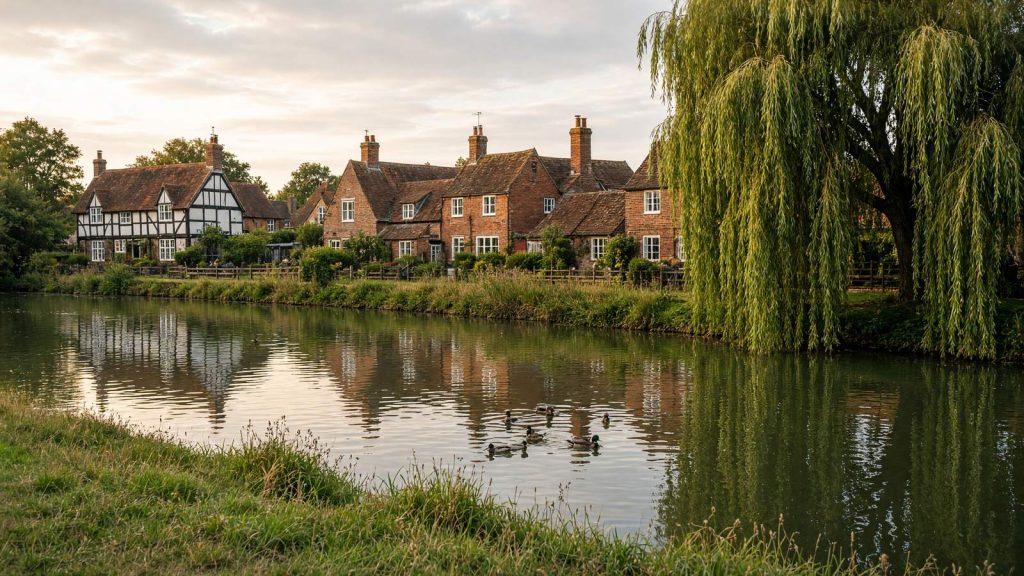
Timber-framed and brick cottages beside a village pond with a willow tree, typical of a Hertfordshire village

Leak under the floor in Abbots Langley?

Call 07700 102 008 from 8am to 8pm, any day, and say what your floor is made of.