
Home / Greater London

Enfield, Havering and the borders

Leak detection in London: Enfield and Havering

In Enfield and Havering, a leak often first shows as a stain from the flat above, a letter about the meter or a combi that keeps losing pressure. We locate it from the surface before anything is opened.

Leaks between flats traced

Thermal imaging on floors and ceilings

Supply pipes under paving found

Lines open 8am to 8pm daily

Get a quote

Lines open 8am to 8pm, every day.

Our water leak detection in London covers two outer boroughs: Enfield in the north, where the capital meets Hertfordshire, and Havering in the east, where it meets Essex. Both grew outwards, so Victorian and Edwardian terraces give way to interwar semis and then to big post-war estates of houses and low-rise flats.

Many homes in both boroughs are flats, some in purpose-built blocks, others in older houses divided into two or three. A leak in one flat tends to show in the flat below, so whoever sees the stain is rarely the person whose pipe it is. Access upstairs comes first.

Front gardens are often paved for parking, with the supply pipe beneath the slabs. Many kitchens reach into the garden or side return on a solid floor. So the first job, in a flat or a house, is finding which pipe the water is escaping from. Our engineer Charlie has worked across the area for over 15 years.

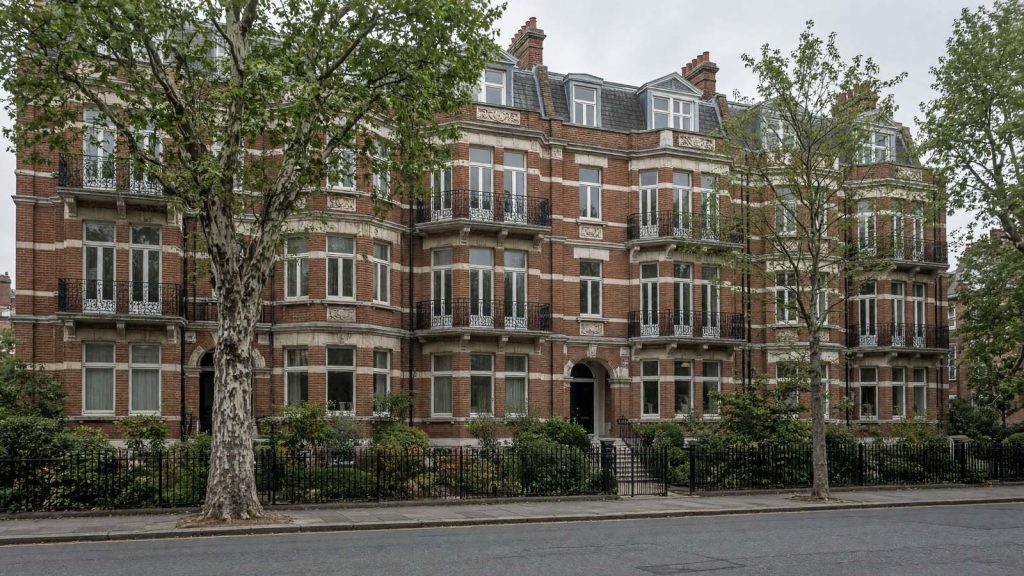
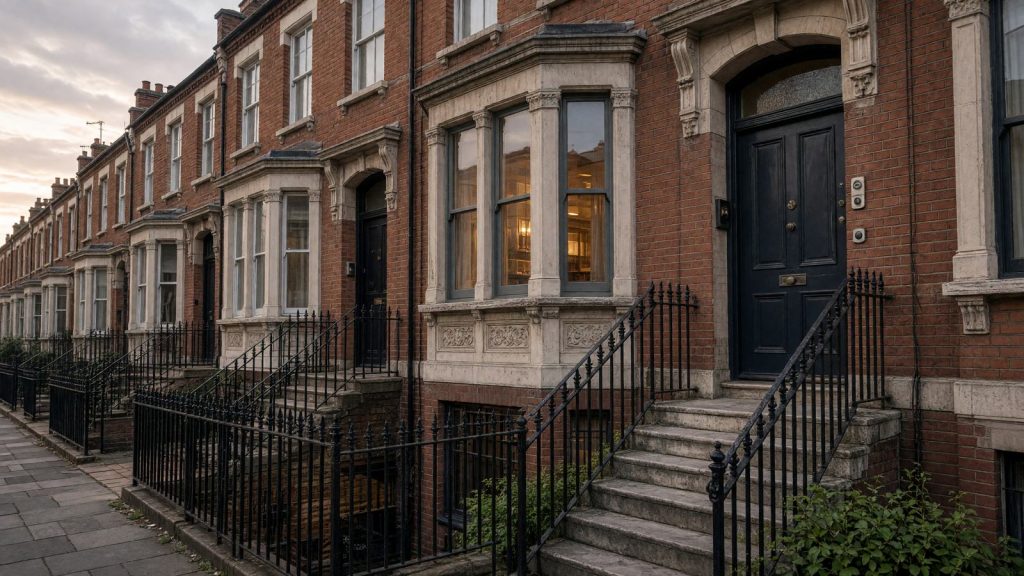
A red brick Edwardian mansion block of flats with iron balconies, typical of north London Edwardian terraced houses with stone front steps, railings and basement lightwells, typical of north London

Typical jobs on London's north and east edges

Cold pipe leaking under a lean-to utility room

The property

An interwar semi on the Havering side, with a utility room added in a lean-to. The washing machine's cold pipe runs from the kitchen under its concrete floor.

The problem

An Essex and Suffolk Water letter said the meter showed constant use. The house was dry throughout, and the owners could hear nothing running.

How we found it

Closing the stop tap halted the meter, so the leak was indoors. Testing the kitchen pipes one at a time showed the utility branch would not hold pressure. The ground microphone found a hiss mid-floor, and tracer gas rose there too.

The outcome

We mended the pipe during the visit, under its own quote. The owners kept the report and repair invoice to show the water company it had been fixed.
A block's shared supply under the car park

The property

A small purpose-built block of flats on the Enfield side, fed by one supply pipe from a single meter, under the residents' car park.

The problem

The managing agent had a letter saying the block's meter never stopped. Every flat reported dry floors and sound taps and toilets.

How we found it

With every flat's stop tap shut, the meter still moved, so the shared pipe was leaking. A ground microphone along its route peaked under one parking bay, where tracer gas then surfaced.

The outcome

We marked the bay and photographed it. The agent shared the report with the freeholder, together with a separate quote for the repair.

Ceiling stain under a flat left empty

The property

A flat in a low-rise post-war block with concrete floors. The flat above was empty between tenants, its heating pipes buried in the concrete floor.

The problem

A brown stain kept spreading across the hall ceiling, though nobody was using water upstairs. The upstairs owner found the boiler gauge sitting at zero.

How we found it

Readings from below outlined the wet area. Upstairs, the refilled heating held pressure only once the hall radiator's valves were shut. With the system warm, the camera showed a warm patch spreading across that floor; tracer gas backed it up.

The outcome

We marked and photographed the point in the upstairs hall. The written report named the leaking pipe for both owners' insurers, with the repair quoted separately.

What tends to give a leak away here

A mark spreading on your ceiling

In a flat, a ceiling stain often comes from the home above: a shower, a waste or a heating pipe. Note whether it grows after showers or all the time.

Dark lines between paving slabs

A front garden paved for parking hides the supply pipe. A strip of slabs that stays darker than the rest after dry weather can sit over a leak.

A combi that will not hold pressure

If the gauge drops within days of a top-up and no radiator drips, a heating pipe may be leaking inside a concrete floor or a boxed-in corner.

A meter that moves overnight

If the meter in the pavement turns when nobody is using water, a pipe beyond it is leaking somewhere: under the path, under a floor or inside the house.

From booking to the written report

1

Arrange access, upstairs included

Tell us who will let us in. In a flat, ask the neighbour above to agree access too, and mention any managing agent. Check the stop tap turns, and tell us about any leak sealant in the heating.

2

Testing on the visit

Readings come first. Then stop taps and valves are closed one by one until the meter or gauge shows which home and which pipe is losing water. Charlie only marks the point once a different test lands on it too.

3

Payment, report and repair price

Payment is taken as we leave, by card or bank transfer. Once that is done the report is sent, ready for the household above, the freeholder or an insurer. Repairs are quoted separately.

People in Enfield and Havering we can help

Living below a leaking flat

The stain is on your ceiling, but the pipe is upstairs. Readings below map the wettest area; then, with the owner's agreement, the upstairs fittings are tested one at a time.

Landlords and agents with lets

Many homes on post-war estates and in converted houses are let. Tell us whose keys we will use and who pays. The photographs in the written report then show you the marked spot, so you need not travel.

Households with a water company letter

In Havering that letter usually comes from Essex and Suffolk Water; in Enfield, check your bill. Either way, we first prove whether the water is going indoors or under the front path.

Methods that work in flats and terraces

Moisture meters

The first tool in a flat below a leak. Readings across the ceiling or wall show where the damp is heaviest, which narrows the search upstairs before any fitting is tested.

Thermal imaging

In London flats and extensions, thermal imaging leak detection suits heating and hot water pipes in concrete floors, boxing and ceilings. With the system warm, escaping water leaves heat on the surface for the camera to see.

Tracer gas

For quiet pipes and pipes set in concrete floors, we use tracer gas, a hydrogen and nitrogen mix. It slips out through the split and rises to a sensor held over the floor or paving.

Two water companies on the edge of London

Essex and Suffolk Water supplies most homes in Havering, despite the London address. Thames Water supplies much of the capital, but in Enfield go by the company named on your bill. A letter about a leak means water has been flowing through the meter without pause. On the house side of the meter or boundary, the pipe usually belongs to the owner, often under a paved front garden.

Flats: whose policy, and which report

When water passes from one flat to another, more than one policy may be involved: the freeholder's buildings cover and each household's own. Check yours, and ask whether your insurer has to sign off our visit beforehand. The report, sent after full payment, gives the location, methods, readings and photographs, including which flat. The claim decision stays with the insurers.

Enfield, Havering and their neighbours

Enfield borders Waltham Cross and Cheshunt in Hertfordshire, with Waltham Abbey across the Lea in Essex. Havering takes in Romford, Hornchurch and Upminster, with Brentwood, Aveley and South Ockendon just over its Essex boundary.

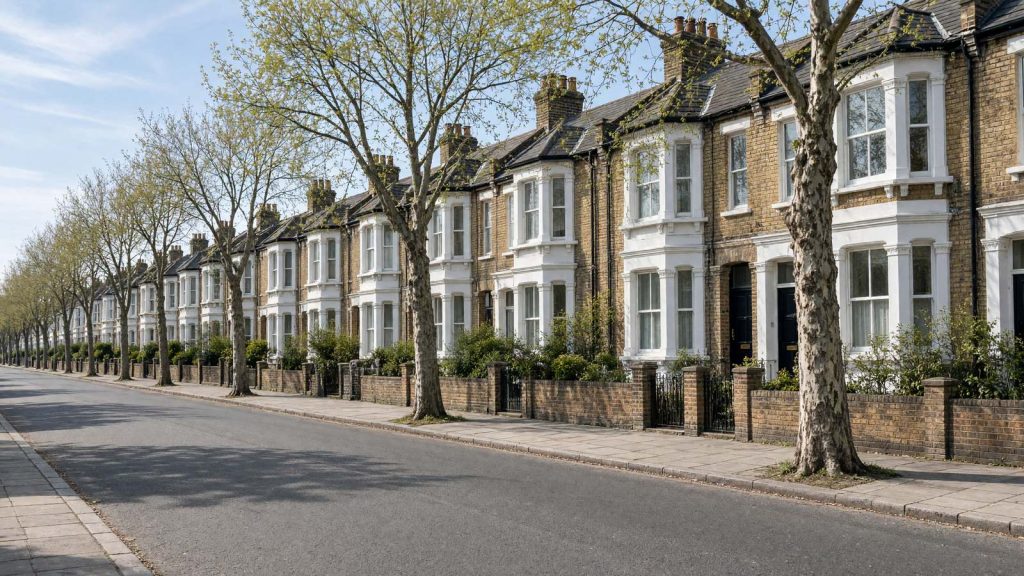
A long street of Victorian bay-fronted terraced houses with plane trees, typical of east London

Common questions in Greater London

We work in two boroughs: Enfield in north London and Havering in east London, plus the neighbouring towns in Hertfordshire and Essex. If you are elsewhere in London, ring before booking and we will tell you honestly whether we can reach you.

You do not need to be there. Book by phone or email, tell us who is letting us in, and say that you are paying from elsewhere. An absent payer may have to settle up before we confirm a date, and the report is sent once paid.

Finding it does not need the floor up. Each loop is closed at the manifold, the row of valves that feeds the loops, and tested alone. The one that drops is warmed for the camera, then tracer gas narrows it to a point. Insulation or a membrane over the pipes can limit the tests; we will say if so.

A free space within 100 m is what we ask for, such as your drive or a visitor permit. Where there are only paid or permit bays, the charge is passed on at cost. Mention the parking rules when you book.

Visits are usually booked within 24 to 48 hours. Lines are open 8am to 8pm, every day, so you can describe the problem first, and we can tell you which tests are likely and what the price will cover before anything is arranged.

Stain, letter or pressure drop? Ring us

Call 07700 102 008 and tell us what you have found. Lines are open 8am to 8pm, every day.