

Home / Essex / Aythorpe Roding

Farms, barns and cottages in the Rodings

Leak detection in Aythorpe Roding

Around Aythorpe Roding, the pipe from the meter can cross a yard or paddock, and nobody may know its route. We trace its course by sound and mark where the repair should go.

Long supply pipes walked

Farmyard supplies tested spur by spur

Price agreed before the visit

Get a quote

Lines open 8am to 8pm, every day.

South-west of Great Dunmow, Aythorpe Roding belongs to the Rodings, a cluster of villages named after their river. It is a scatter of farmhouses, cottages and converted barns. Leak detection in Aythorpe Roding often means a supply pipe many times longer than a town garden, buried where nobody has looked for decades.

Where an old farmyard has been divided into several homes, they may still draw water through one meter by the road, along a route never drawn on any plan. Some older cottages have also had a concrete floor laid later, with heating pipes buried in it.

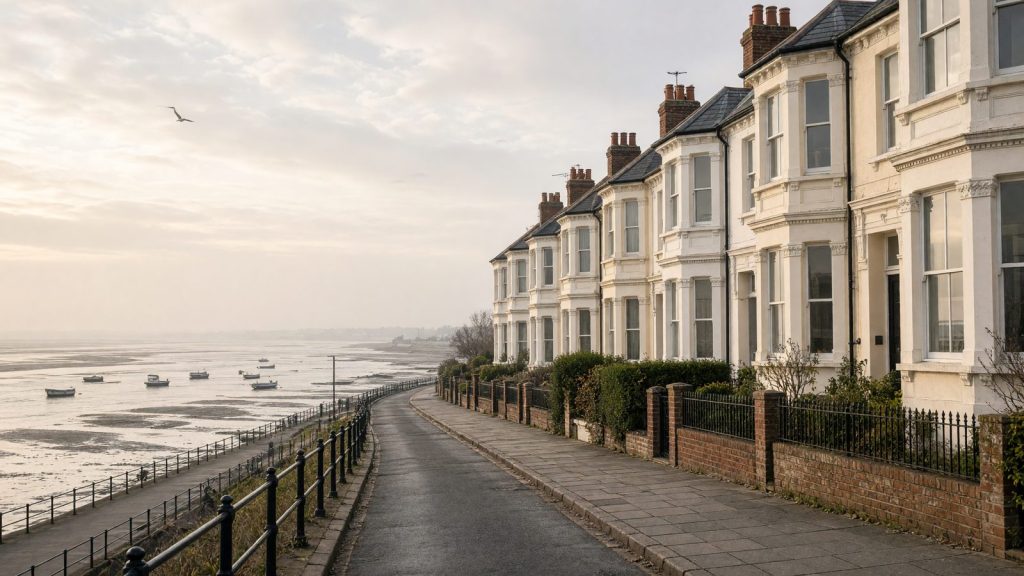
Victorian bay-fronted houses on a hillside road above an estuary, typical of an Essex seaside town A narrow street of Victorian red brick terraced houses with a church tower at the end, typical of an Essex town

The kind of leak we trace in the Rodings

Three homes on one farmyard supply

The property

A former farmyard split into a farmhouse and two barn conversions, all fed from one meter by the lane through a plastic pipe nobody had mapped.

The problem

The water company wrote to the farmhouse about continuous use. Each household was sure the leak was not theirs, and nobody wanted a trench across the yard.

How we found it

With every stop tap shut the meter kept running, so the loss lay before the spurs. Walking the route, the microphone caught a faint hiss; tracer gas pinned it under the yard.

The outcome

One hole was dug at the mark, not a trench. The report put the leak before the pipe splits, so the households could settle the repair between them.

Heating pipe in a cottage's later concrete floor

The property

A timber-framed cottage whose ground floor was later relaid in concrete, burying the heating pipes. The boiler sits in a lean-to at the back.

The problem

Twice a week the boiler wanted refilling, though no radiator leaked. The owner's insurer had said trace and access cover might apply once the leak was found.

How we found it

Nothing had been added to the water. With the boiler isolated, the heating still lost pressure. Once warm, the camera showed a patch spreading near the hearth, and floor moisture readings agreed.

The outcome

Our marked, photographed spot went into the report the owner sent with the claim. Opening up and repairing the floor were quoted separately.

Who we help around the Rodings

Homes on a long or unmapped supply

If nobody knows the route, tell us where the meter is and where the pipe rises indoors. We follow the likely line with a ground microphone until we hear it.

Neighbours drawing from one farmyard meter

One meter, several homes, and a letter that could mean any of them. Testing each spur alone shows which section leaks before anyone digs across the yard.

Owners claiming for an old cottage floor

Trace and access cover may help where a heating pipe leaks inside a solid floor. Check your policy first; our report gives the location, methods, readings and photographs.

The meter by the road and the pipe to your door

Your bill names the company that supplies you; around the Rodings it is worth confirming rather than assuming. The company's part normally stops at the meter or boundary, which may be out by the road. Everything from there to the house, and any spur to outbuildings, is normally the owner's, however long it runs.

Tracing a long rural supply

1

Where the meter is, and how far

We ask where the meter is, about how far the pipe travels and where it enters the house. Old plans, a greener strip of grass or a soggy gateway all help.

2

Walking the line with a microphone

With water in the pipe and everything indoors off, we listen at intervals along the likely route. The hiss swells as we approach the leak and fades past it.

3

Confirming with tracer gas

On plastic pipe or a quiet leak, a hydrogen and nitrogen mix goes into the emptied line. Where it surfaces confirms the point, which our engineer Charlie marks and photographs.

Methods for long runs and old floors

Acoustic listening

The ground microphone is the main tool on a long run across grass, gravel or hardstanding. Metal pipe carries the sound furthest; plastic often needs tracer gas as well.

Tracer gas

We empty the pipe and fill it with a hydrogen and nitrogen mix. Wherever the pipe is split, the gas rises through soil, gravel or concrete to a detector above.

Thermal imaging

In an old cottage with heating pipes in a later concrete floor, escaping warm water shows as heat spreading from one point once the system has run.

Digging in the right place first time

On a long rural run, the costly mistake is opening up in the wrong place. The marked, photographed spot is where digging should begin, though a leak is proven only when uncovered. Planning a trace and access claim? Find out from your insurer what they require before booking. The report follows payment.

Common questions in Aythorpe Roding

Yes. A price is agreed first, for a half or full day of leak detection. No find, no fee on home water leaks covers water mains up to 30 m long, so on a longer pipe the quoted price applies whatever we find. Full conditions are on our terms page.

One household books the visit and agrees the price; tell us if someone else is paying or the property is not yours. The report shows which section is leaking, so the households can share it and decide who repairs it.

Yes, with that owner’s agreement for us to reach the meter and walk the route. Tell us before the visit if the pipe runs through or under a neighbour’s property, so access can be arranged and the day planned properly.

For a heating leak, yes, once we reach the thermal imaging stage, because warm pipes show up on the camera. Leave the boiler working and reachable, and tell us how often it needs topping up and whether sealant has gone in.

Visits are usually booked within 24 to 48 hours, rural homes included. Lines are open 8am to 8pm, every day. Mention gates, tracks or livestock when you ring, so we can plan safe access along the whole of the pipe’s route.

Villages and towns near the Rodings

Great Dunmow is the nearest town, with Stansted Mountfitchet and Bishop's Stortford to the north-west and Sawbridgeworth west on the Stort. Our rural leak detection in Essex follows the Roding south to Chipping Ongar and over towards Writtle.

White weatherboarded cottages with picket fences along a village street, typical of Essex

Leak on a long Rodings supply?

Call 07700 102 008 any day, 8am to 8pm, and tell us roughly where the meter sits.