Any smell of gas
Ring the gas emergency service first, not us. Once they have made it safe, tell us where the smell was strongest, because it helps narrow the search.

Gas pipework, after it is made safe
If you can smell gas, ring the gas emergency service first. Once they have made things safe, the leak may still be hidden. We trace it from the surface and mark it for your gas engineer.
Only after it is made safe
Tracer gas on isolated pipework
Leak marked for your gas engineer
Homes, lets and business sites
Lines open 8am to 8pm, every day.
The gas emergency service makes a property safe, which can mean capping the supply at the meter. That does not always show where the pipe leaks, especially under a solid floor, inside a wall or underground to an outbuilding. You can be left without gas and unsure where to open up.
Finding that spot is what our gas leak detection service does. We work only on pipework already made safe, tracing and marking the leak. Putting the pipe right and turning the gas back on is work for a registered gas engineer, who can then start in one place.
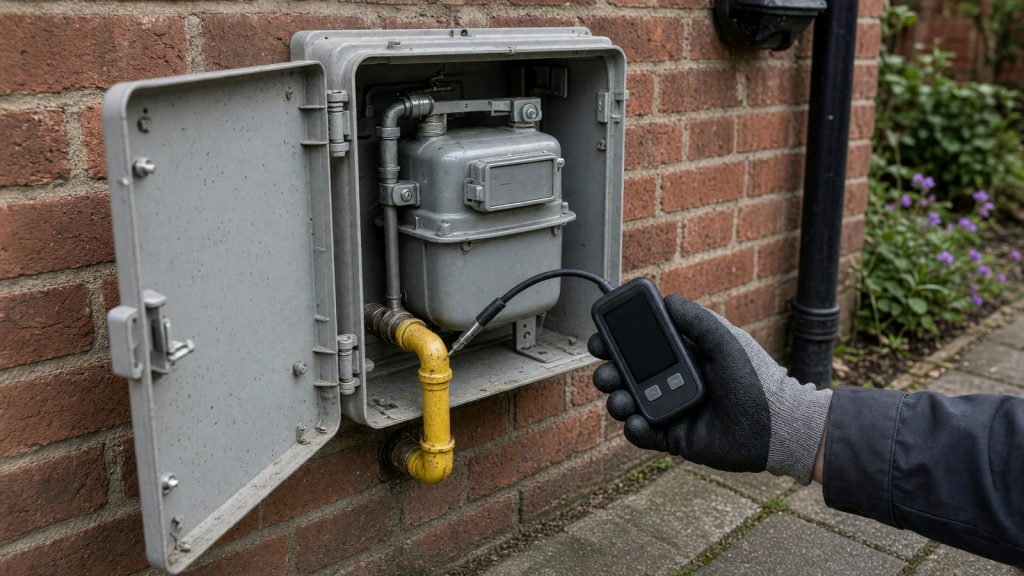
A gas pipe leak can be small and slow. A gas engineer's test can show the pipework is losing pressure without showing where. Pipes run under concrete, behind kitchen units, through walls and out to garages, and a smell can drift far from its source. Lifting floors or pulling out units to look takes time and may still miss it.
We start from pipework that has been made safe and isolated, and from your gas engineer's results, which show whether one branch or the whole system is losing gas. That length is filled with a hydrogen and nitrogen mix, and a detector above it finds where the mix comes out. We confirm the point, then mark and photograph it for the gas engineer.
Ring the gas emergency service first, not us. Once they have made it safe, tell us where the smell was strongest, because it helps narrow the search.
Your gas engineer's pressure test fails, yet no appliance or visible fitting is to blame. That points to a leak on a hidden length of pipe.
The supply has been capped and cannot go back on until the leak is found and put right. Knowing the exact spot saves lifting floors to look.
A strip of grass dying towards a garage or workshop, with no dry spell to blame, may lie over a leaking buried gas run. Ring the gas emergency service first.
With the supply capped there is no gas for heating, hot water or cooking. Your gas engineer has found a pressure drop but not the leak, so we find the point.
A tenant with no heating wants answers, and you may live some way off. When you ring, say the house is rented out and who will pay us. If you cannot attend, we may ask you to pay first.
Business sites often have gas runs buried under yards or across land. When the gas emergency service has made the site safe, we trace the run and mark the leak for your gas engineer.
1
We begin only once the gas emergency service has made it safe, and the supply stays off throughout. Tell us what they did and what your gas engineer found.
2
Where the pipes run, what covers them and which part failed your gas engineer's test tell us where to start: a kitchen branch, a pipe under a floor or a buried run.
3
That run is filled with a hydrogen and nitrogen mix, and our engineer Charlie traces the pipe route with a detector over floors, walls and ground. The point is confirmed, marked and photographed.
A hydrogen and nitrogen mix goes into the isolated pipe and leaves at the leak, where a detector finds it through screed, boards, plaster or soil.
It shows whether the pipework holds gas. If parts were tested separately, the results tell us which length to fill with tracer gas and follow first.
We mark the point where the floor, wall or ground needs opening and photograph it, so your gas engineer has a clear record even after we leave.
The property
A post-war semi in Essex with a tiled kitchen extension. The pipe to the gas hob was thought to cross the extension inside its concrete floor.
The problem
After a smell in the kitchen, the gas emergency service capped the supply. The family's gas engineer found a pressure loss but no fault at the hob or boiler.
How we found it
The gas engineer's test had put the loss on the hob branch. With tracer gas inside, readings rose at a grout line by the back door and peaked at the same tile on every pass.
The outcome
We marked and photographed one tile, which gave the gas engineer a single place to start instead of lifting the whole kitchen floor.
The property
A gas-heated farm workshop in Cambridgeshire, fed by a pipe buried across a concrete yard from the meter beside the farmhouse.
The problem
A smell near the yard gate brought out the gas emergency service, which made the site safe. The buried run then failed the gas engineer's pressure test.
How we found it
With the run isolated and filled with tracer gas, the detector followed its likely line across the yard. Readings peaked at a crack about halfway across and fell away on both sides.
The outcome
Booked as a business, the farm paid before the visit was confirmed. The crack was marked and photographed, giving their gas engineer one spot to break out.
The property
A rented Victorian terrace in Norwich with suspended timber floors. The gas pipe runs from the front meter under the front room and hall to the kitchen.
The problem
The tenant noticed a faint smell and the supply was capped. The landlord lives away, and nobody wanted boards lifted all through the house.
How we found it
The gas engineer had narrowed the loss to the run under the front of the house. Tracer gas came up between two boards by the hall door, and readings either side fell away.
The outcome
That gave the gas engineer two boards to lift instead of a whole floor. The landlord paid ahead, as they could not attend, and received the report with its photographs.
You get a written report giving the location, methods, readings and photographs once the visit is paid. Some policies help with finding a hidden leak and opening up: check whether yours extends to gas pipework, and whether your insurer needs to approve the visit first. The claim decision is your insurer's.
We trace leaks on gas pipework for homes, landlords and businesses, from Victorian terraces in the towns to farm workshops with long buried runs. Choose your county below for the local pages.
Call 07700 102 008 and tell us what the gas emergency service and your gas engineer found. Lines are open 8am to 8pm, every day.