Boiler losing pressure, no visible leak
The gauge drops and nothing looks wet. Water from a buried pipe can soak into concrete or dry off under boards before it reaches the surface.

Heating and boiler pressure
Your boiler has been checked and passed, but the gauge keeps dropping. That usually means a central heating leak in a hidden pipe. Our engineer Charlie works from the surface to find it and confirm it.
Price agreed before you book
Traced under floors and in walls
Repairs guaranteed for 3 months
Lines open 8am to 8pm, every day.
A sealed heating system sends the same water round and round, so the boiler gauge should barely move from week to week. Topping up every few days means water is getting out. Once the boiler is ruled out, the likely cause is a pipe under a floor, in a wall or behind units.
Heating leaks rarely make a puddle, so the gauge may be your only clue. No find, no fee on home water leaks does not cover central heating. Instead you get a price before booking, based on a half or full day's tracing, and an early find does not reduce it.
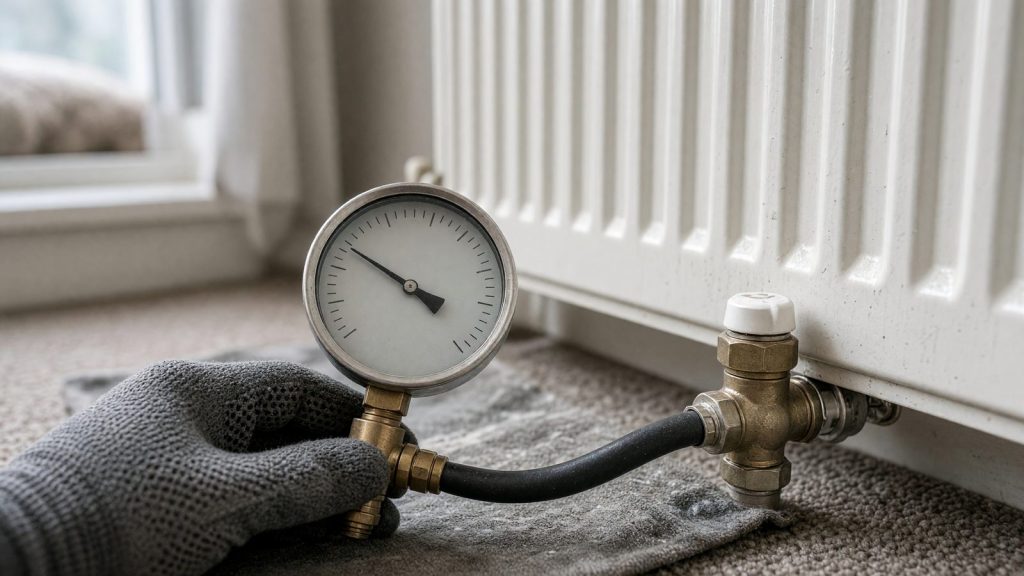
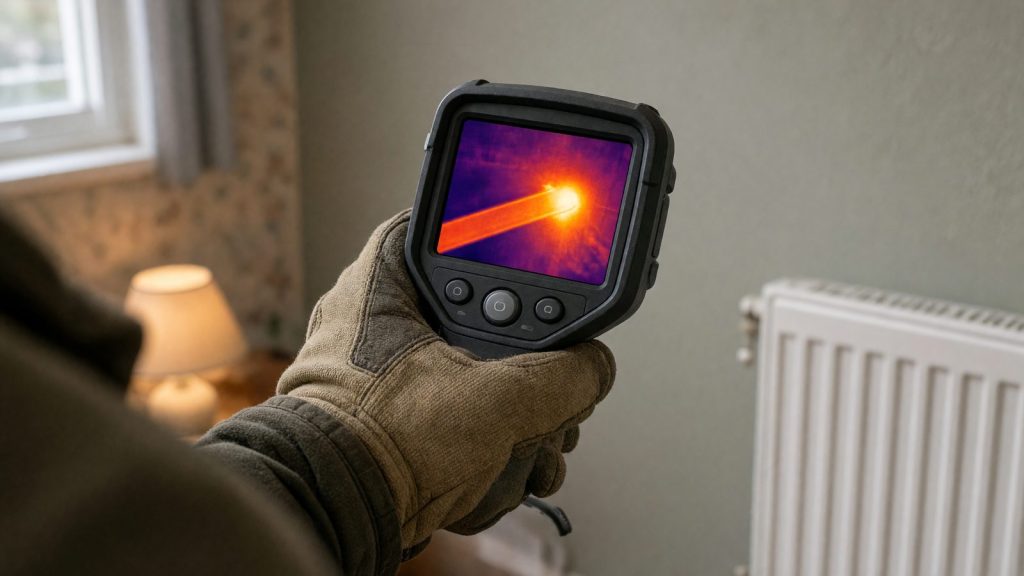
A central heating leak can sit anywhere the pipes run. Under the boards of an older house, it is most often a joint. Many homes built from the 1970s onwards have pipes in a concrete floor, where a pinhole can weep for months. Others hide in boxing, behind kitchen units or at a radiator valve that only drips when hot.
There is no single answer to how to find a central heating leak, because the floor decides the method. In concrete, warm water spreads through the screed, the thermal camera usually picks it up and tracer gas pins the point. Under timber boards, water drips into the space below, so the camera shows less and testing each pipe run on a gauge does more.
The gauge drops and nothing looks wet. Water from a buried pipe can soak into concrete or dry off under boards before it reaches the surface.
Once a month became once a week, then every few days. Leaks tend to grow, and the gap between refills hints at how much is escaping.
Tiles or laminate that feel warmer than the rest of the room, often between two radiators, can mean hot water spreading from a pipe beneath.
A dark mark on a skirting, plaster bubbling low on a wall or a damp carpet edge near a radiator can mean a weeping joint or valve.
The boiler passed its checks, yet the pressure still falls. A system leak means the loss is in the pipes or radiators, not the boiler, and finding which pipe is our job.
Many houses have heating pipes buried in screed, the smooth concrete layer under tiles or carpet. A leak there stays hidden, so thermal imaging is usually how we find it.
A tenant keeps topping up and you cannot be there. Tell us at booking who will open the door, as we may ask you to pay before the visit is confirmed.
1
Say how often the boiler needs refilling and from what reading, what the ground floor is made of, and whether sealer has gone in. Those answers shape the visit and the price.
2
We use the water meter to rule out the pipes feeding your hot taps, then close valves to split the heating into sections. Whichever section keeps losing pressure is the one we trace.
3
With the heating on, the thermal camera follows the pipes and picks out spreading warmth. Tracer gas or pressure testing has to back it up before Charlie marks and photographs the spot.
Hot pipes show through tiles, carpet and laminate as warm lines, and a leak spreads warmth sideways from them. The heating has to have been running first.
We close off part of the circuit and fit a gauge. If the reading holds, that part is sound; if it falls, we look there next.
Used for a leak in concrete, or one too small for the camera. A hydrogen and nitrogen mix escapes at the hole and is picked up at the surface.
The property
A 1970s detached house near Bury St Edmunds on a concrete ground floor. The downstairs radiator pipes run in the screed and rise through the floor beside each radiator.
The problem
The owner was topping up about half a bar a day, and the carpet edge under the study radiator felt damp. Tightening the radiator valves had made no difference.
How we found it
Moisture readings peaked around one radiator pipe. With that radiator's pipes closed off and tested on a gauge, the pressure fell, and the thermal camera showed heat spreading below the floor.
The outcome
The pipe had corroded where it left the concrete, just under the carpet. Only a hand-sized patch of screed came out to replace that short length, quoted separately.
The property
A Victorian terrace in King's Lynn with floorboards over a shallow space downstairs. The radiator pipes run in that space, through the low brick walls that hold up the joists.
The problem
The gauge needed bringing back up twice a week, yet no radiator, valve or visible pipe was wet. A plumber had lifted boards by each radiator and found them dry.
How we found it
With the heating hot, the camera followed a warm streak across the back room boards to a wider warm patch. Testing that pipe run alone on a gauge confirmed the loss.
The outcome
Lifting the boards over the mark showed a split in the copper where it was squeezed through one of those walls. A new length went in there and then, quoted separately.
The property
A post-war house in Stevenage with a solid ground floor and a mix of copper and plastic heating pipes, some in the floor and some boxed in.
The problem
After weeks of topping up, the owner had poured leak sealer into the system. The pressure held for a while, then started falling again, more slowly.
How we found it
The owner mentioned the sealer at booking, so their heating engineer flushed the system first. Pressure tests found the section, thermal imaging located the leak and tracer gas pinned it down.
The outcome
The leak sat under the utility room floor. Once it was marked, the owner had the repair priced separately and sent our report in with a trace and access claim.
Some home policies include trace and access. If yours does, ask the insurer before booking whether they need to approve the work. The written report gives the location, methods, readings and photographs, and reaches you once the bill is paid. Start any opening up at our mark. The insurer alone decides whether to pay.
We trace heating leaks in homes of every age, from terraces with wooden floors to new houses with pipes in screed. For central heating leak detection near you, choose your county below.
Call 07700 102 008 with your top-up pattern and floor type. Lines are open 8am to 8pm, every day, and visits are usually booked within 24 to 48 hours.