
Gas meter capped: what it means
Having your gas meter capped means the engineer from the gas emergency service has turned off the valve at the meter and fitted a cap or seal so no gas can reach your pipework. It usually tells you they found gas escaping, or a fault they judged unsafe, somewhere after the meter: on the pipework in the property or at an appliance.
Capping only makes the property safe; nothing has been repaired yet. The gas network looks after the pipe up to your meter, but the pipework after it is the owner's responsibility, so finding and fixing a leak there is left to you. There is usually a warning label on the meter or valve, and often a notice saying what was found and why.
Leave the cap, seal and label where they are
Do not try to turn the meter valve back on
If you can smell gas, ring the gas emergency service first
Keep the notice for your gas engineer and insurer
Why the leak point may still be unknown
The engineer who caps a meter may know gas is escaping without knowing exactly where. Your gas engineer can then carry out a tightness test, a pressure test that shows whether the pipework holds gas. A failed test proves gas is getting out somewhere. It does not say which joint, bend or length of pipe is to blame.
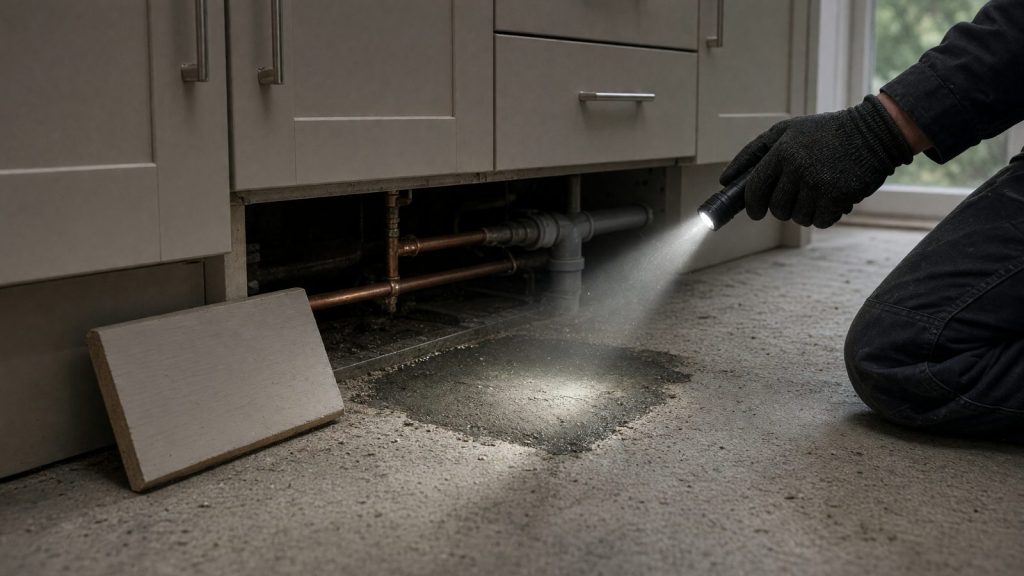
Visible joints at the boiler, hob and meter are easy to check with leak detection fluid. The hard ones are hidden: a pipe under a concrete floor to a gas fire, behind fitted units to the cooker, or buried in the garden on its way to a garage or workshop. A faint smell can also travel through floor voids and cavities, so the room where it is strongest is a clue, not the answer.
How a leak on gas pipework is traced once it is safe
We only begin once the gas emergency service has made it safe, and the gas stays off throughout. Before any tracing, we go over the route with you: where the pipe leaves the meter, which appliances it feeds and what lies on top of it. That lets us start on the lengths nobody can see, such as a run under the hall floor or a buried pipe out to a garage.
The isolated pipework is filled with tracer gas, a hydrogen and nitrogen mix, and a detector is passed slowly over the route: across floors, up walls, along paths and lawns. The reading climbs as the detector nears the leak and peaks above it. When a second method agrees, we mark the spot and photograph it, giving your gas engineer a clear place to start opening up.
Your written report follows payment for the visit and gives the location, methods, readings and photographs. Your gas engineer can work from it even if they arrive after we have gone, and you can send it to your insurer if you are making a claim. Opening up can then start at the mark rather than across a whole floor.
Who puts the pipe right and turns the supply back on
Finding the leak is our part. The repair belongs to a registered gas engineer, who opens the floor, wall or ground at the mark, replaces or remakes the faulty section and tests the whole installation again. Only once it passes can the cap come off, the supply go back on and the appliances be relit.
If the meter itself was taken away, or the supply was cut off before the meter, your gas supplier or the gas network may need to be involved before it can go back on. The paperwork left by the gas emergency service should say what was done, and your gas engineer can tell you who to contact.
Until then there is no gas for cooking, and no heating or hot water if your boiler runs on gas. An immersion heater, if your cylinder has one, an electric kettle and a plug-in heater can bridge the gap. Booking your gas engineer for soon after our visit is the simplest way to shorten the time you are without gas.
Homes, lets and business sites
In a rented home the tenant usually feels the loss first: no heating, no hot water, no cooker. The landlord or agent normally books and pays. Tell us at the start that the property is let, who is settling the bill, and which keyholder will meet us. When the bill payer is away that day, we may want paying before the date goes in the diary.
On business sites the gas pipe can run a long way, across a yard or under a concrete floor to a kitchen, workshop or boiler room. A business is sometimes asked for payment up front, before we fix a date, and to let us know a working day ahead, or earlier, if plans change. No find, no fee on home water leaks does not cover gas pipework or businesses; full conditions are on our terms page.
Before booking, ask your insurer whether any trace and access cover on your policy applies to gas pipework as well as water, and whether they insist on approving the firm before work starts. If you let the property out, check your buildings policy, as fixed pipework is usually treated as part of the building. Whether anything is paid out is for your insurer alone to decide.
What to tell us when you call
The details below help us judge whether the tracing needs half a day or a full day, so we can agree a price by phone or email before you book. That price is not reduced if the leak shows up quickly. Parking, tolls and any materials come on top, at cost.
On the day, please clear a path to the meter, along the pipe route and into any outbuildings, and move anything stored over the gas pipe. Parking must be within 100 m of the door and cost us nothing. Card details hold your booking, and card or bank transfer settles the bill once we have finished. We do not take cash or cheques.
What the gas emergency service did, and what the label says
What your gas engineer's pressure test showed, if one has been done
Where the smell was strongest, and when it was noticed
The meter's position and the pipe's route: boiler, hob, fire, outbuildings
What covers the pipe: concrete, boards, tiles, paving or soil
Home or business, and the name of whoever is paying