
Which pipe this is
A boiler overflow pipe dripping outside the house usually means the pressure relief valve is letting water out of the heating. Either the pressure inside has climbed too high, or the valve is worn and no longer shuts properly. The pipe is usually thin copper. It runs from the underside of a combi or system boiler, through the outside wall, and turns down at the end.
Two other pipes are easy to confuse with it. A plastic pipe from the boiler, usually white or grey and a little wider, is the condensate pipe. Condensing boilers turn water vapour from burning gas or oil back into water, and this pipe carries it away, so a trickle from it while the boiler fires is normal. If your boiler is fed from tanks in the loft, it may have no pressure gauge at all, and a drip high up under the eaves is a tank overflow.
Copper pipe, turned down at the end: the pressure relief valve
Plastic pipe, often white or grey: condensate, normal while the boiler fires
Pipe high under the eaves: an overflow from a loft tank
Boiler overflow pipe dripping: why it happens
A combi or system boiler heats a sealed circuit of pipes and radiators. The water in it is held under pressure, which you can read on the gauge on the front or underneath the boiler. Many boilers sit at about 1 to 1.5 bar when cold, though your manual gives the figure for yours. As the water heats it expands and the reading rises. The relief valve is a safety part, usually set to open at 3 bar, so the pressure can never build up too far.
It opens for a handful of reasons. The system may have been topped up too far, so it reaches 3 bar once the radiators are hot. The filling loop, the tap or hose used for topping up, may be slightly open or letting mains water creep through. The expansion vessel, a tank with a cushion of air that absorbs the extra volume as water heats, may have lost its air. A pressure relief valve leaking on a boiler at normal pressure is usually worn or has grit on its seat.
Why it can look like a leak in the system
A tired expansion vessel sets off a repeating pattern. The heating comes on, the pressure climbs to 3 bar, and the valve lets water out through the overflow pipe while nobody is watching. Once the system cools, the gauge sits lower than where it started. You top it up, the heating comes on again and the same thing happens. From inside the house, it looks exactly like water escaping from a pipe under the floor.
The difference is where the water ends up. With a valve or pressure fault, it leaves through a pipe you can see, so the end of that pipe is wet, and there may be a stain on the wall or path below it. With a hidden leak, the overflow pipe stays dry and the water goes into a floor, a wall or a ceiling. People call that a system leak, meaning a leak on the heating pipes or radiators, not inside the boiler.
Checks to make before calling anyone
Anyone can make the checks below, and the answers save time whoever comes out. Do not take the boiler casing off, do not tap or force the valve, and never cap, block or bend the overflow pipe. It is there so the boiler can let pressure go safely, and blocking it removes that protection. If the gauge is at or near 3 bar, switch the heating off at the boiler and leave it off until an engineer has looked.
Note the gauge with the heating cold, then after an hour of heating
Look at the pipe end and the wall below it for drips or stains
Check the filling loop taps are fully closed, by hand only
Keep a note of every top-up, with the reading before and after
Look at radiator valves and visible joints for damp or crusty deposits
Heating engineer or leak detection: who to call
Your notes tell you who to ring. A gauge that climbs to around 3 bar when hot, with a wet pipe outside, is a pressure problem: expect the engineer to check the expansion vessel and the filling loop. A normal gauge with a dripping pipe points to the valve itself. A dry pipe with a falling gauge means the water is escaping somewhere you cannot see.
Anything on the boiler is a heating engineer's job: the relief valve, the expansion vessel, the filling loop and the gauge. That applies to gas and oil boilers alike, and many rural homes in Norfolk and Suffolk heat with oil. Book someone who works on your type of boiler. Sometimes you need a heating engineer first and leak detection after: the valve is replaced, the pressure keeps falling, and that shows there was a second fault all along.
Leak detection comes in once the boiler has been checked and passed, and the gauge still drops with a dry overflow pipe. On the phone we will want to know how often the gauge needs topping up, whether the pipes run in a solid floor or under floorboards, and whether anyone has put leak sealant into the heating. Mention sealant even if you are only half sure, as it can upset the testing.
If the valve is fine and the pressure still falls
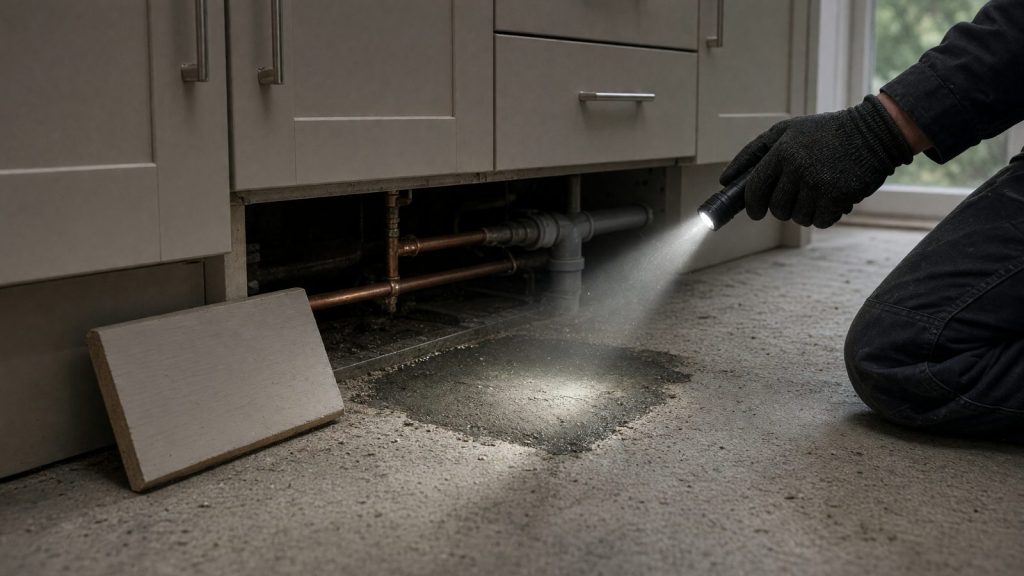
If the boiler has been checked and the overflow pipe is dry, a sealed system that keeps losing pressure most likely has a leak on its pipes or radiators. In homes with solid ground floors, heating pipes often run in the concrete screed, so a leak can soak away for months without a mark. Older cottages and farmhouses may have pipes under timber floors or through later extensions. Escaping hot water shows as a warm patch, which a thermal imaging camera picks up once the radiators are properly hot.
A second method, tracer gas (a hydrogen and nitrogen mix) or a pressure test, confirms it, and the spot is marked and photographed before we leave. Your price is settled on the phone or by email before booking. It pays for the time reserved, half a day or a whole day, so a leak found in the first hour costs the same. No find, no fee on home water leaks does not cover central heating. We can usually repair the pipe too, quoted separately and guaranteed for 3 months.